Vori
Earning grocer trust through marketing
A new website and CRM workflow for a grocery inventory management system.
A new website and CRM workflow for a grocery inventory management system.
October - December 2020
Freelance Designer & PM
Vori is bringing the entire grocery industry online for the first time with a modern operating system. By digitizing the wholesale ordering and discovery process, independent grocers are able to scale faster, delight customers and streamline operations. I teamed up with the founders of Vori to redesign their website and bring a new sense of impact, purpose and excitement to this traditionally pen-and-paper industry. I spearheaded every stage of the process, from building personas to managing a developer for the final build.

Mapping out the details of small and medium-sized independent businesses is frustrating and exhilarating. While they share some similar needs, the innate diversity of people makes every operation unique in it's own way. Spending time interviewing individual customers and diving deeper into the complex supply chain network they exist in was crucial to building this new iteration of the Vori website.
Retailers and Vendors share several core needs: increase revenue, highlight/discover best-selling products and digitize their business. A few key differences: Retailers need help managing inventory and replenishing their stores with a mobile application. Vendors need more insight into their distribution footprint and want to increase sales reach with little friction.
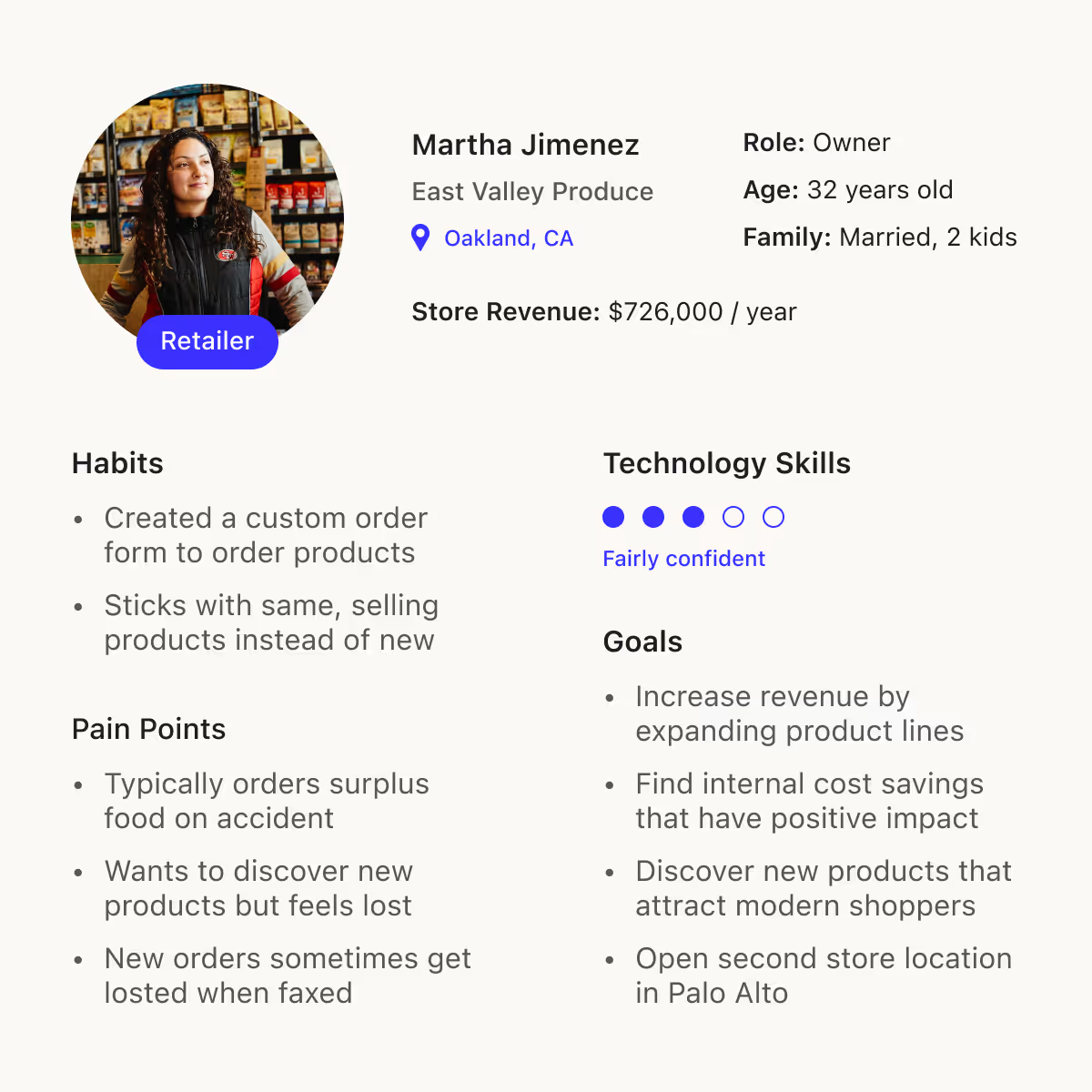
Unlike national chains, most independent grocers operate with a paper and fax process. Therefore, their insight and ability to scale is heavily constrained. They want to bring their store(s) into the digital era and better serve the local community.
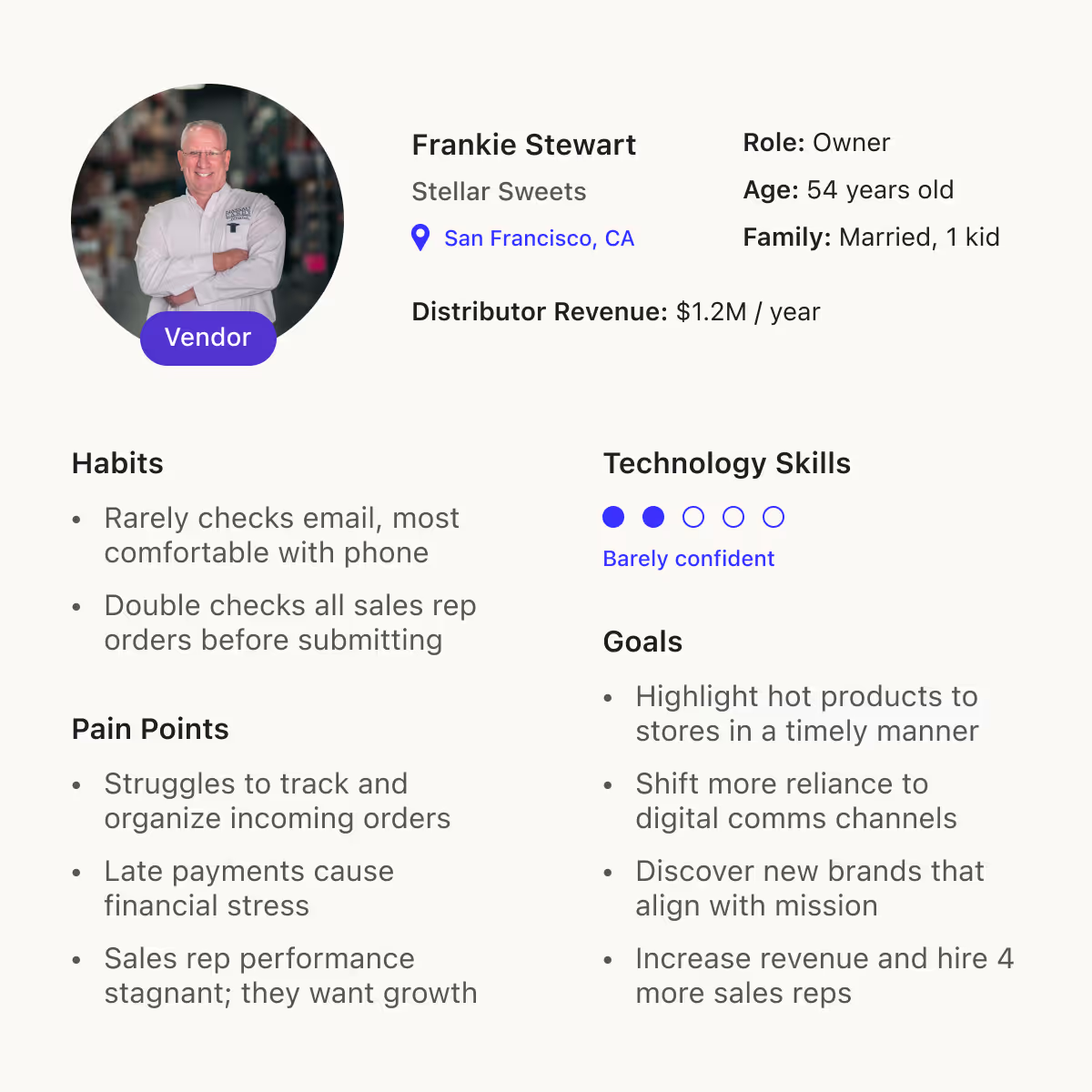
Vendors manage a complex food logistics network with constant moving pieces and little insight across the board. They need solutions that automate predictable tasks and highlight important data so they can increase their footprint.
We had the challenge of transforming the grocery industry from cut and dry to fun and light. Designing this undefined future of food wasn't easy. We leveraged customer profiles, market research and user feedback to continually move in the direction that resonated most with Retailers and Vendors. Every design attempt throughout this project was a step towards simplicity and excitement, leading us toward the eventual final product.
I chose four page snippets that accurately highlight my design and decision making process. Each were changed after design reviews and customer feedback exposed gaps related to specific needs and mismatch with intended branding. Luckily, the Vori team and customers were very accessible and engaged making it simple to explore designs and acquire accurate feedback.
While happy with the features we highlighted, the desktop product sees only 10% of usage from Retailers. We decided to narrow in on the most critical function for this demo: replenishment. By surrounding a large product image with a scan animation and detail card, the user better understands the move from analog to digital.
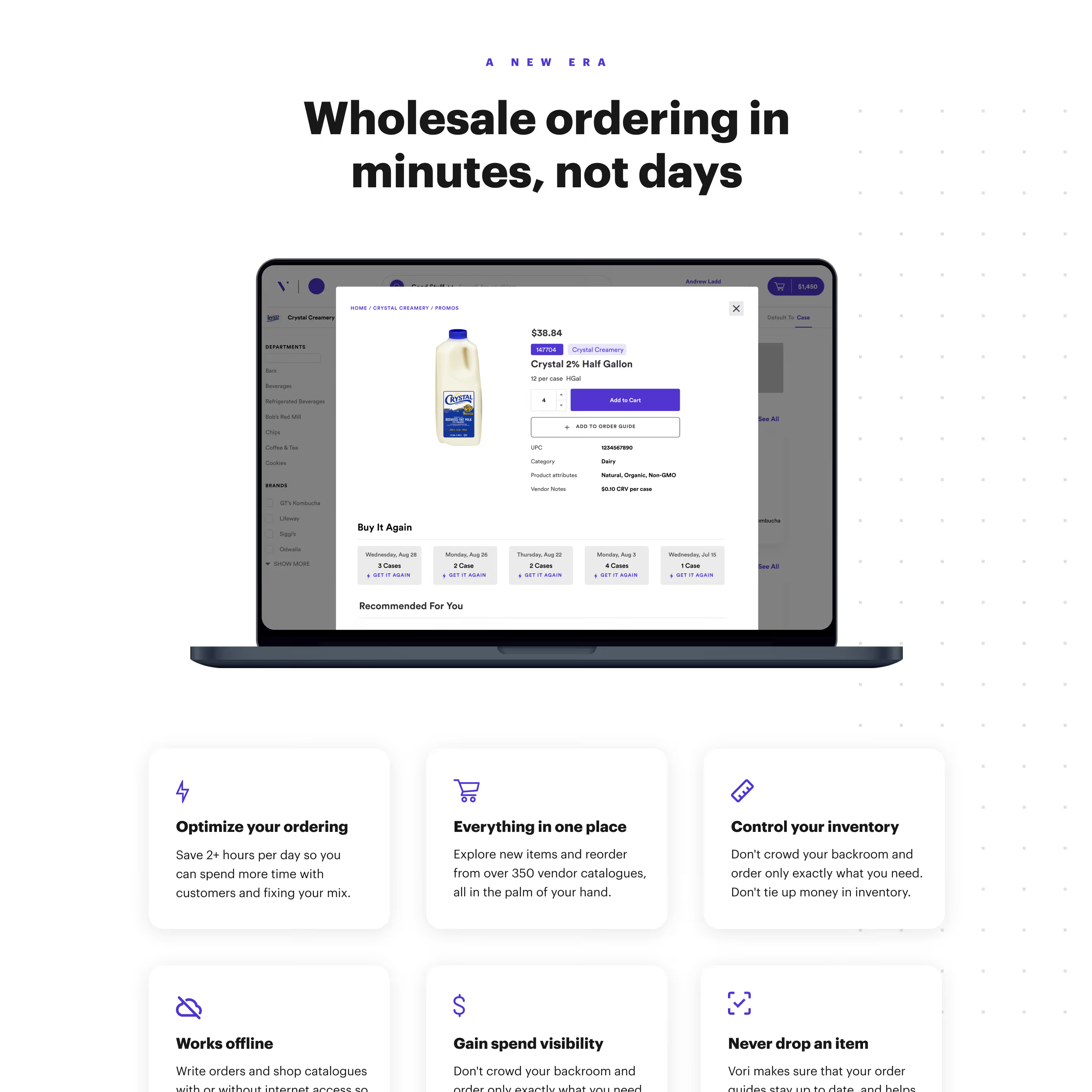
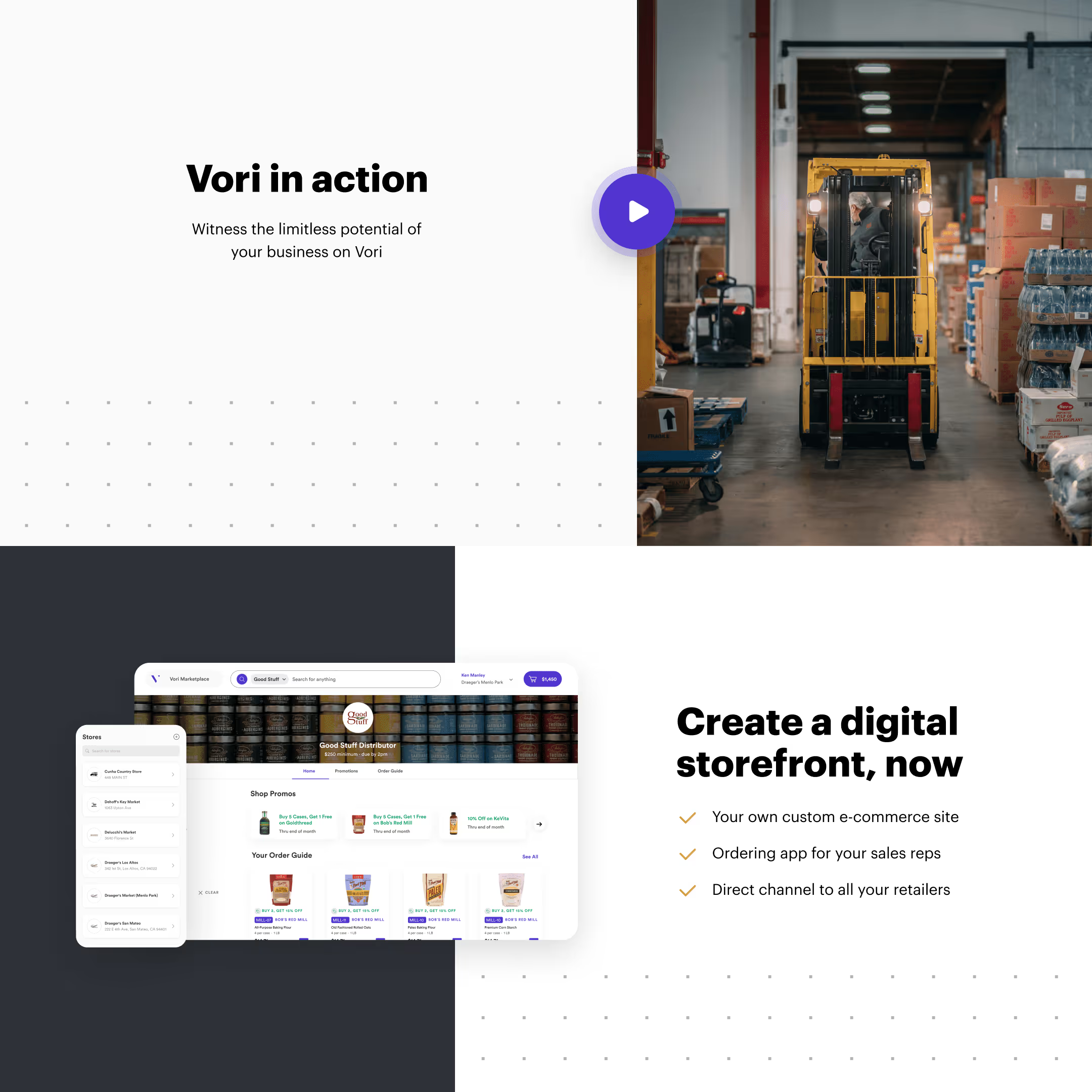
We determined these two sections, a customer video and product mockup, needed to be at the forefront of the website experience. The video was moved to the hero section because social proof is a top need for curious Vendors and the mockup helps them visualize their future store and sales rep experience.
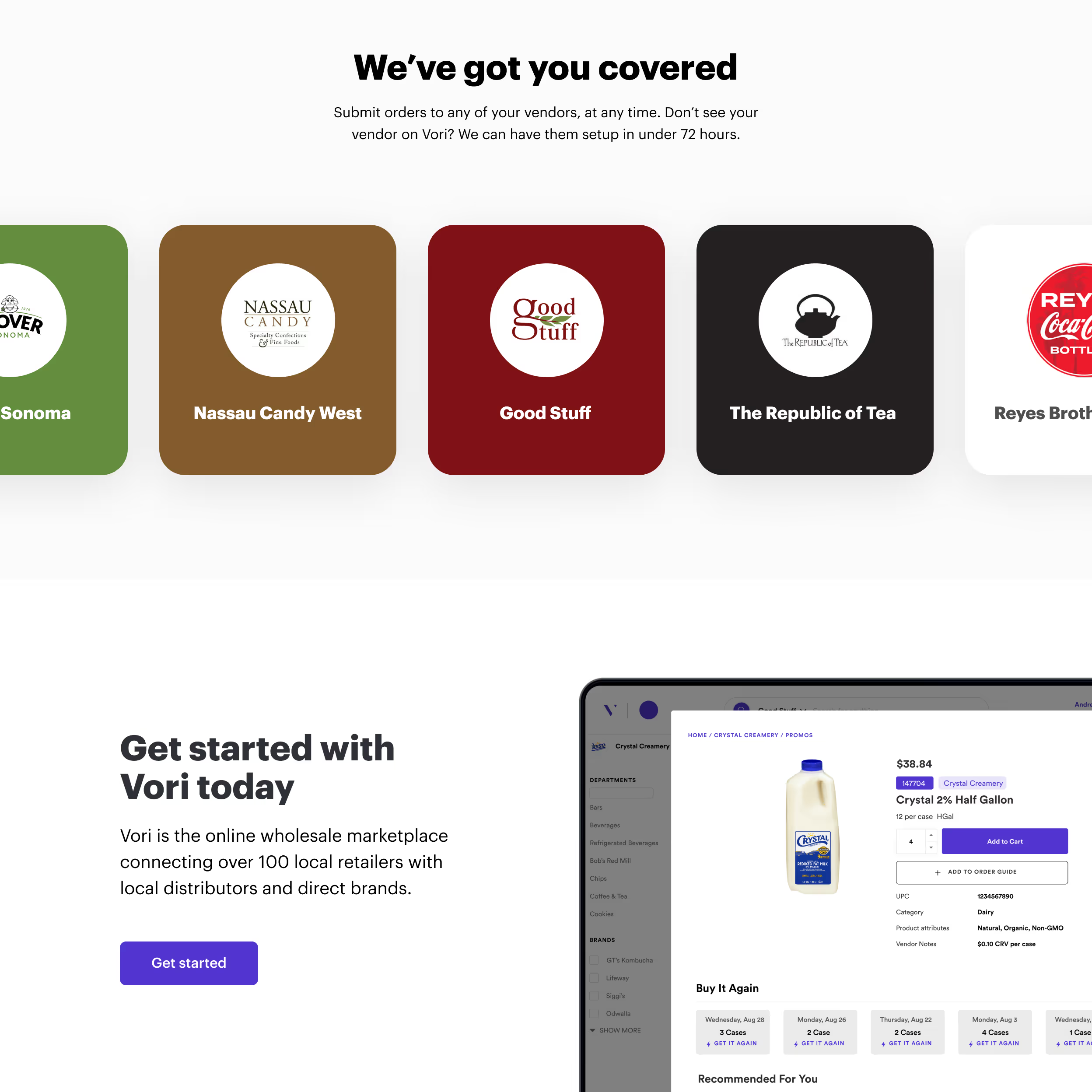
By displaying popular Vendors that trust Vori, Retailers are motivated by the possibility of growth. To better focus on these companies, we removed the color and shifted to vertical movement on the right side. The bottom also shifted from product-focused to a carousel of custom customer images that direct attention to a final CTA.
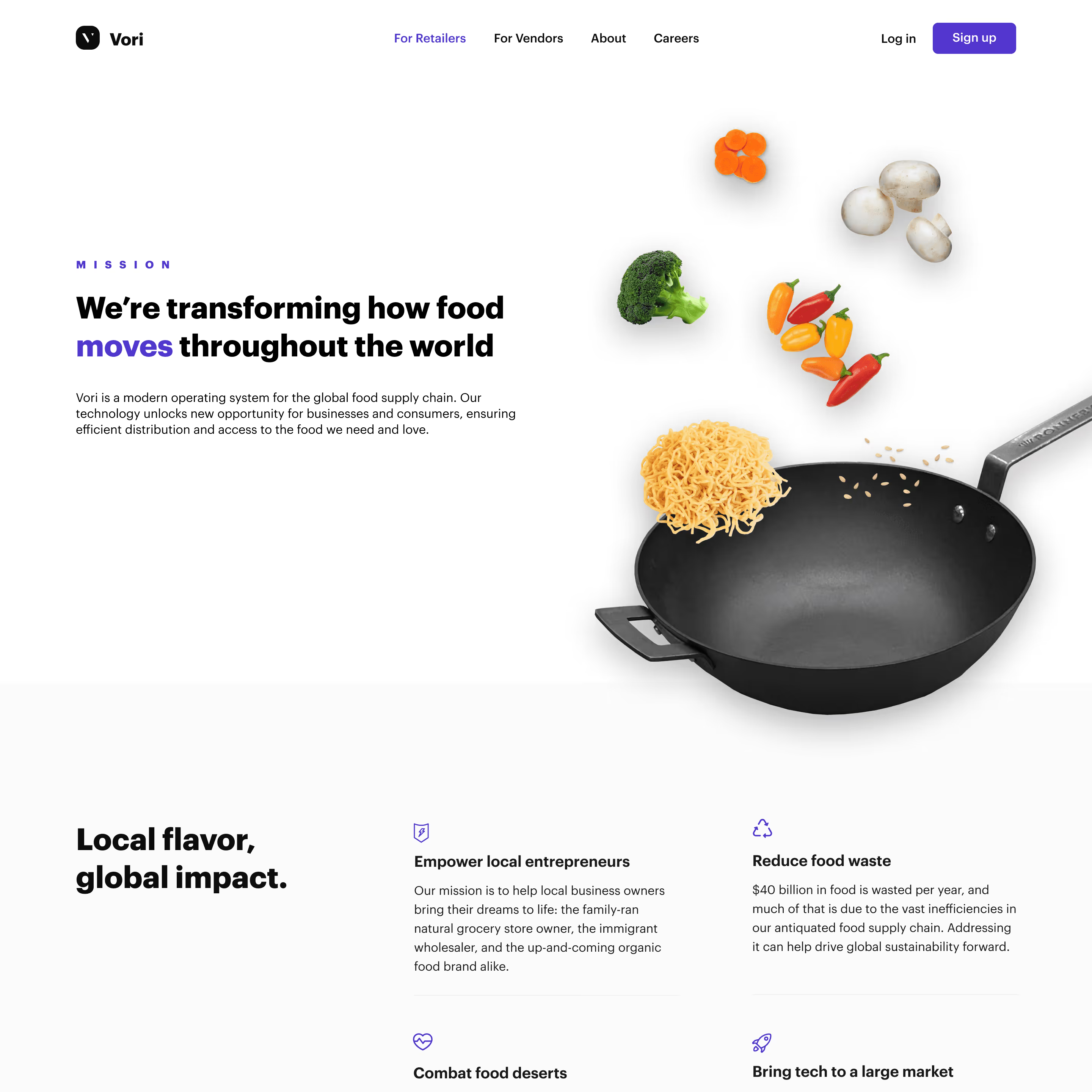
The goal of the About page hero section was to provide additional depth for inquisitive customers and future teammates. We originally tried to channel the "sexiness of food," but decided to align more tightly with the Vori design system: Kinesis. Movement defines the Vori mission and product - transforming how food moves globally.
There were two specific goals of this website redesign: convert prospective customers and attract the best talent in technology. To do this, we knew we had to move the the current energy and branding of the grocery industry forward into the future. We decided to shake things up with a media-heavy experience that best represents the customer Vori serves. In turn, this positioned them as a charismatic leader, building tooling that helps local communities and the global food supply chain thrive.
The core pages, Retailers and Vendors, were structured to take visitors on a visual journey. They begin with a carefully tailored hero and progress into sections that accentuate core product features. We strategically placed reengagement mechanisms that tapped into core user needs, social proof for Retailers and a revenue calculator for Vendors, at page halfway points. The About and Careers pages give inquisitive customers and future employees an authentic look into Vori's culture and long-term vision. They provide important depth that humanizes the product and overall mission of the team.
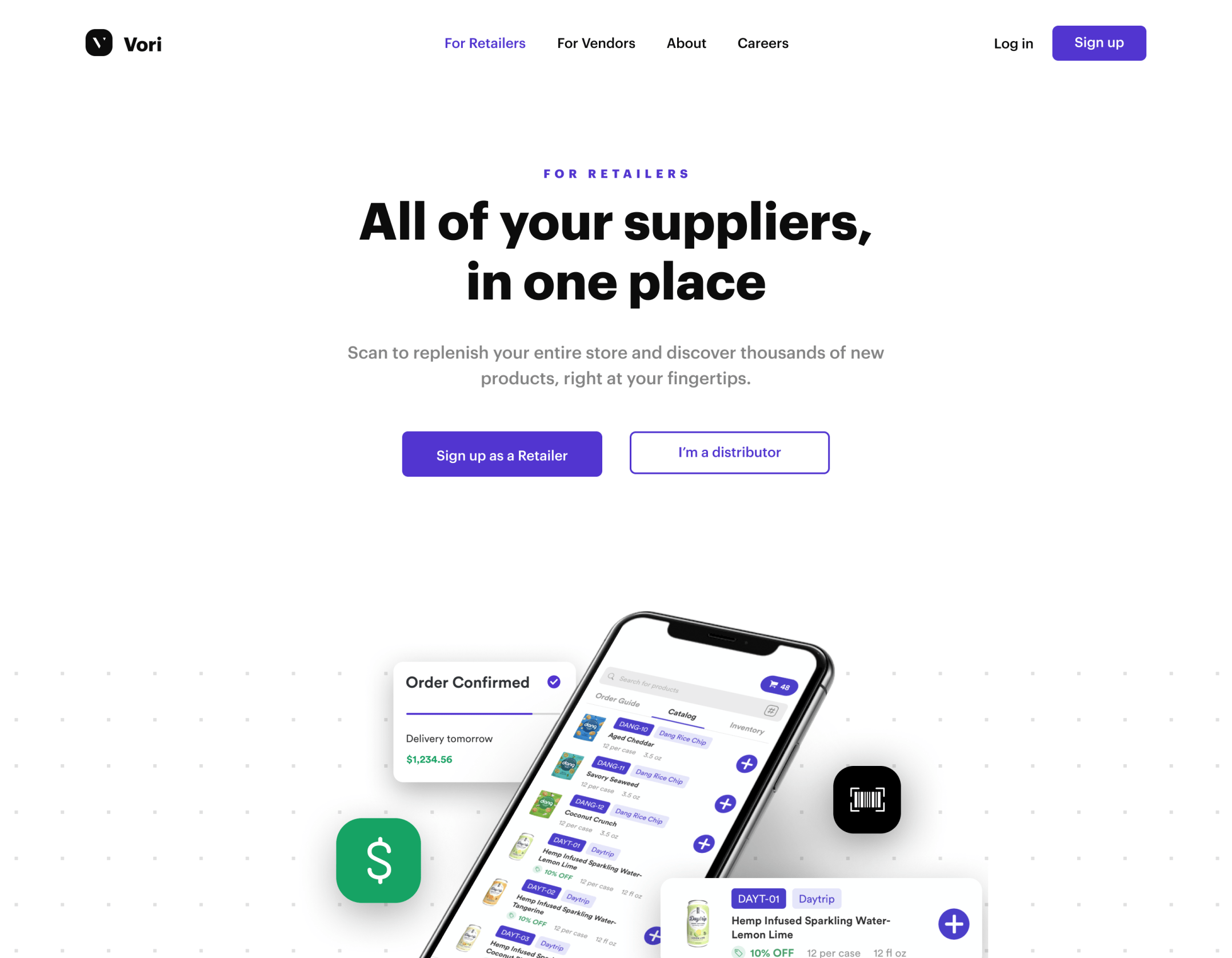
The homepage leads the user through a story of digital store transformation. It moves from core product highlights and an authentic customer video to store-specific social proof and granular details that power the Vori Retailer experience.
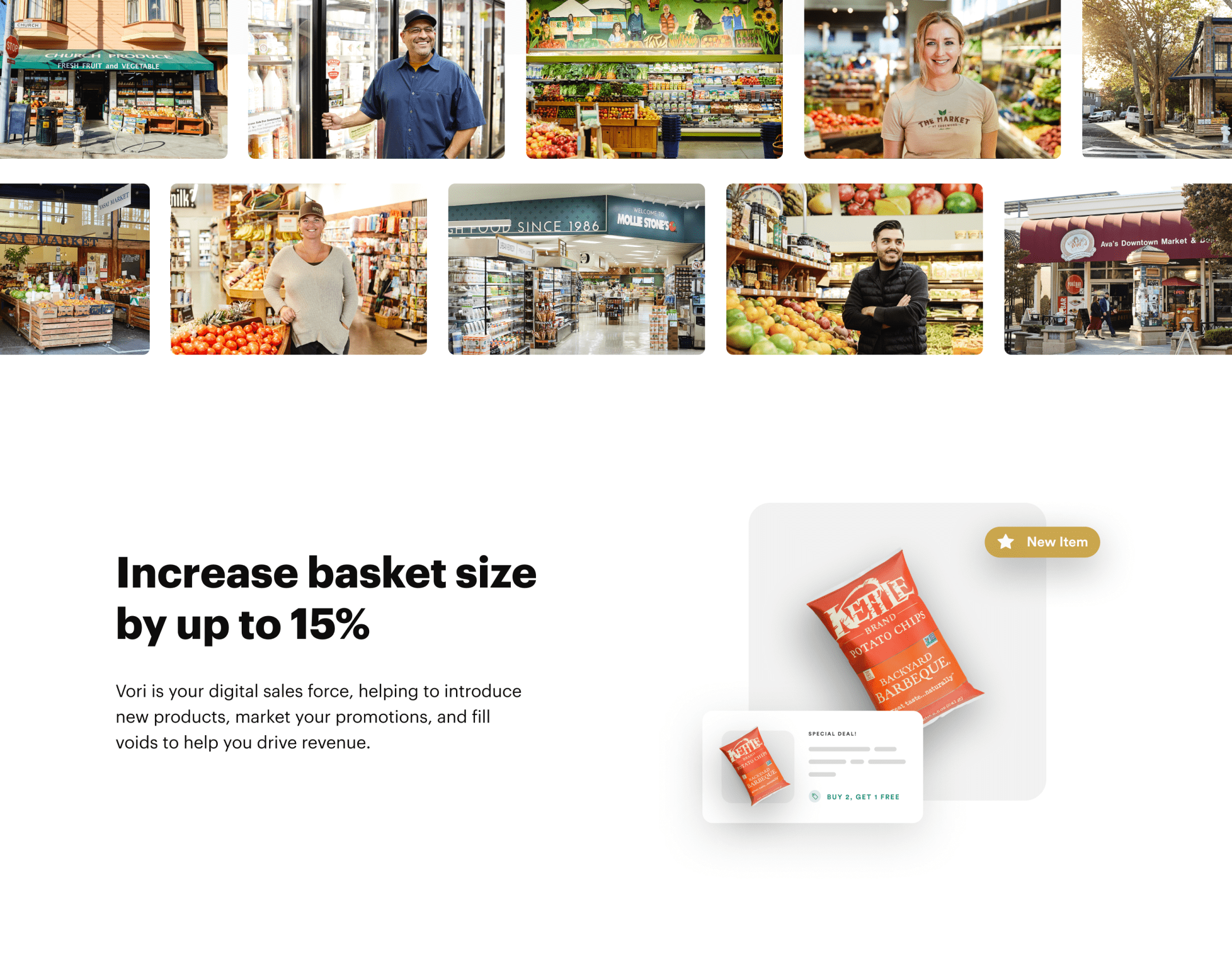
The Vendors page answers recurring customer questions related to growth potential, simple setup and community success. Animations draw attention to important information and a mid-page revenue calculator captures interest in the moment.
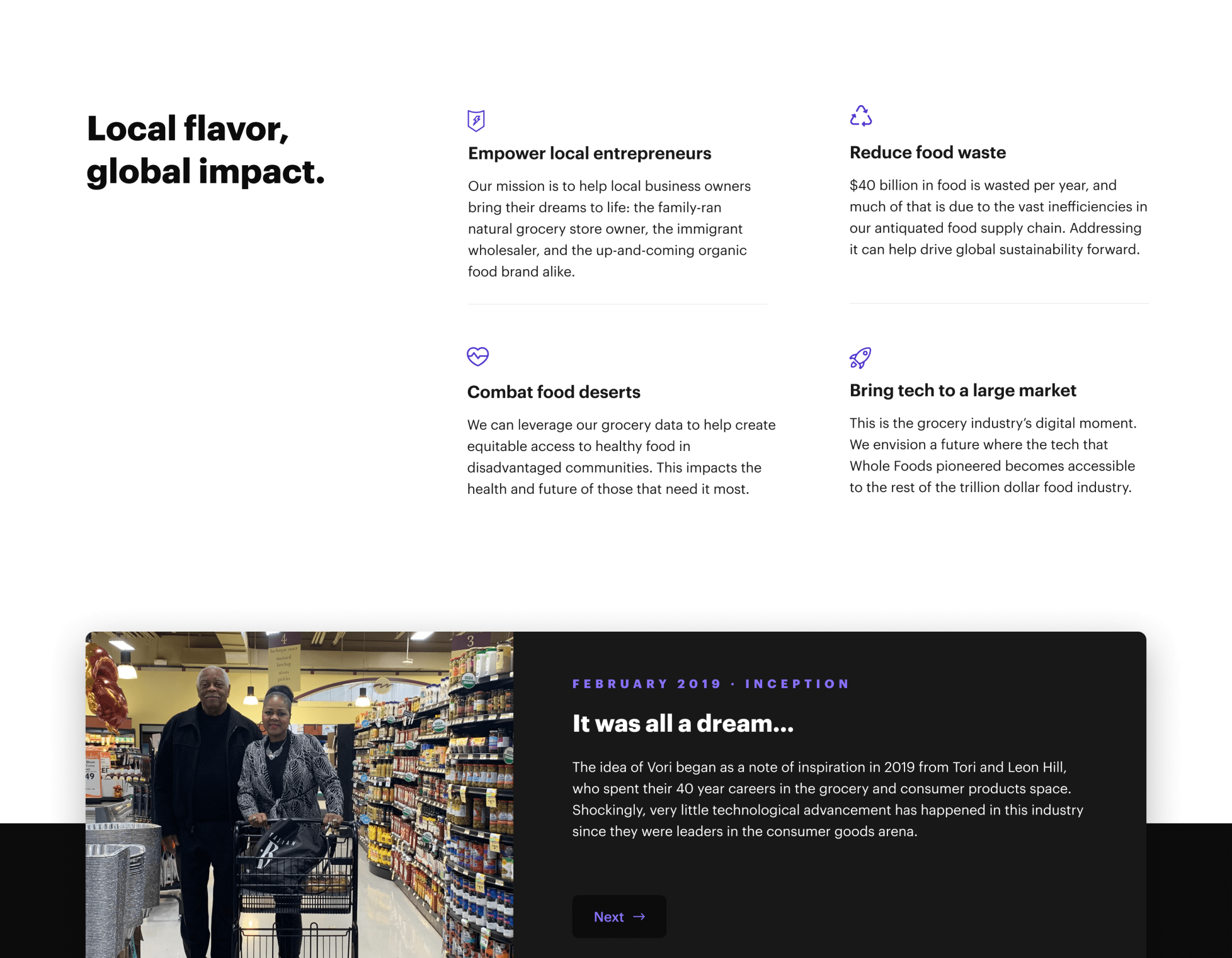
The About page features an intimate look at customer stories, the desired long-term impact of Vori and the people building this new marketplace. Each section contains a focused theme that humanizes the mission and prevents information overload.
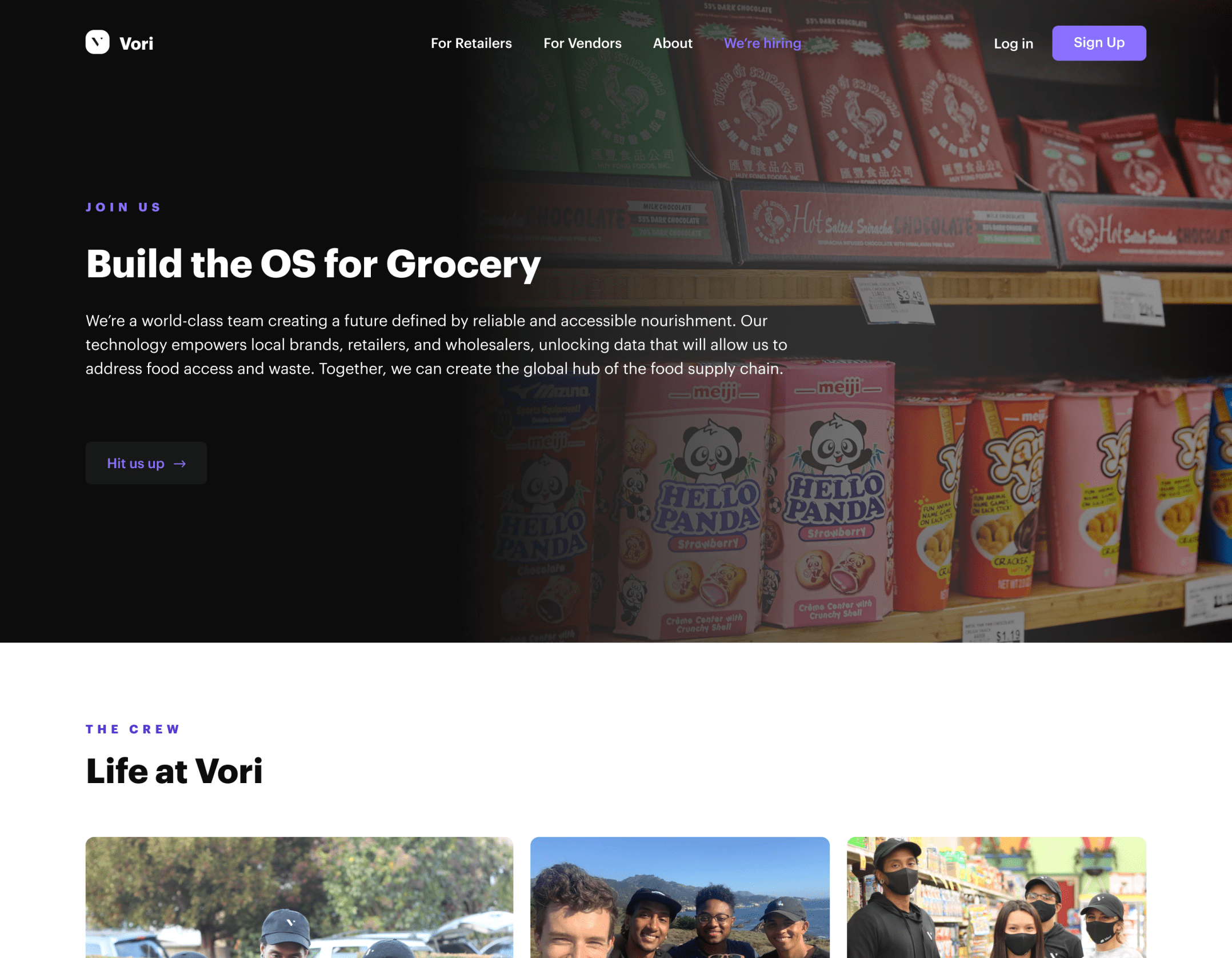
The goal of the Careers page is to attract exceptional and diverse talent with a hunger for outsized impact. We dive deeper into team, culture and core challenges to create a cohesive pitch that makes the future of food exhilarating.
Customer portraits, subtle animations and product highlights — just a few of the creative elements we used to tell a story of accessible nourishment. It's a new era for the global food supply chain and Vori is leading the charge.
View the site →Automating predictable and recurring tasks unlocks time and mental capacity that can be directed towards more strategic initiatives within a company. This results in greater efficiency and the ability to create experiences that otherwise wouldn't have been possible. By building an interconnected customer system, every team member can operate better and faster.
A core goal of this new website was to attract and process new leads in a highly functional way. This involves form submissions for Retailers and demo bookings for Vendors. Therefore, I created a robust Airtable CRM with stage-specific automations that acts as a single point of truth for their entire Vori team.
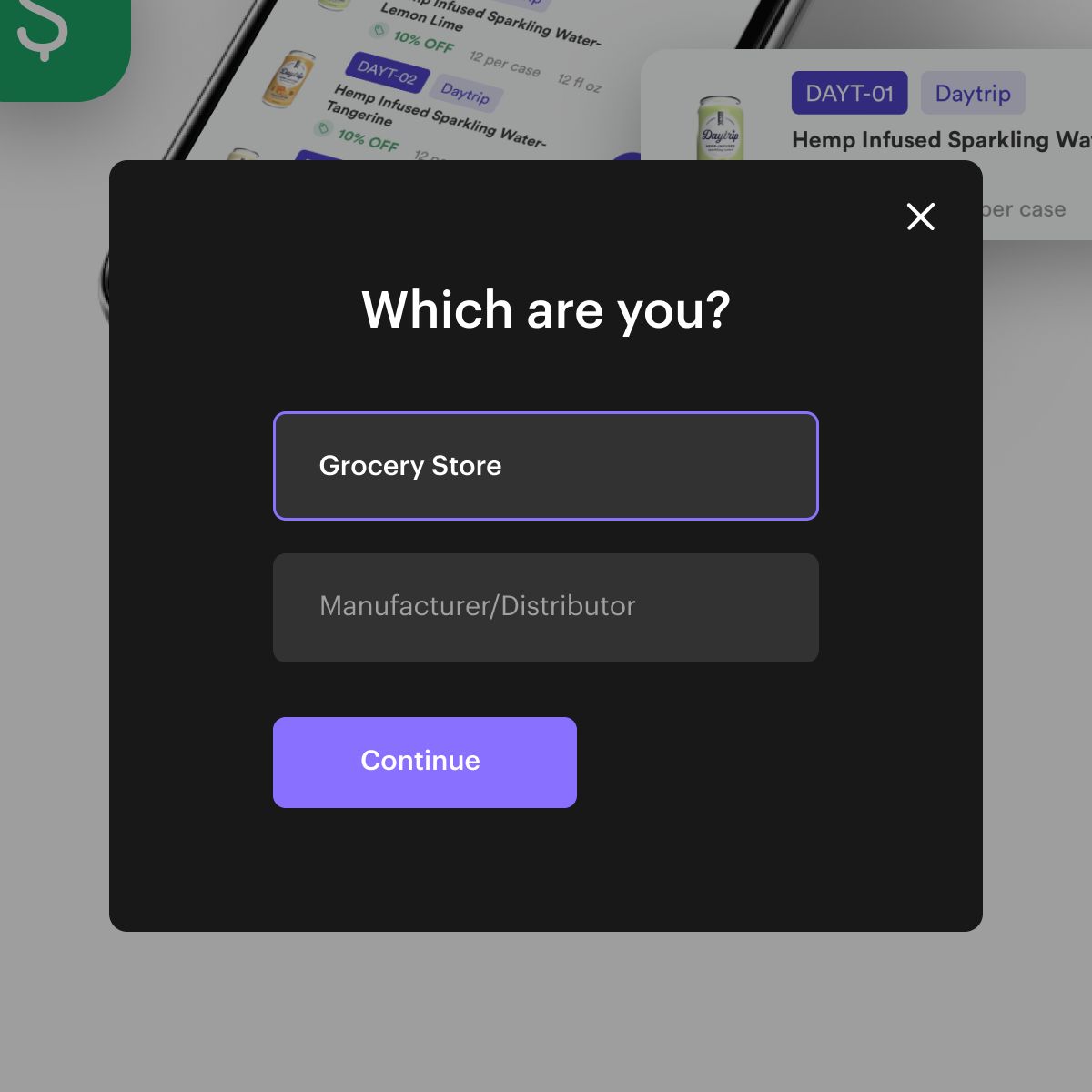
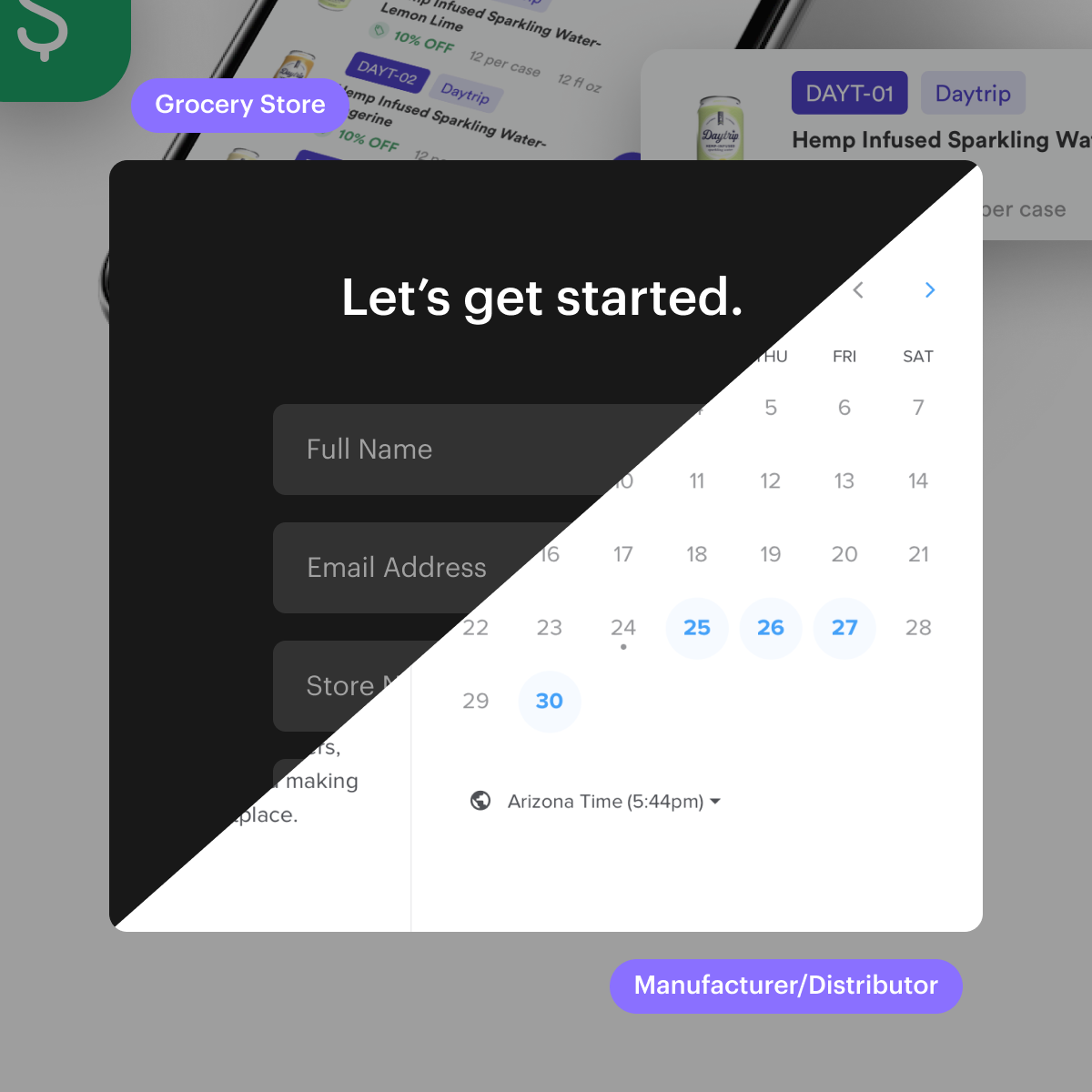
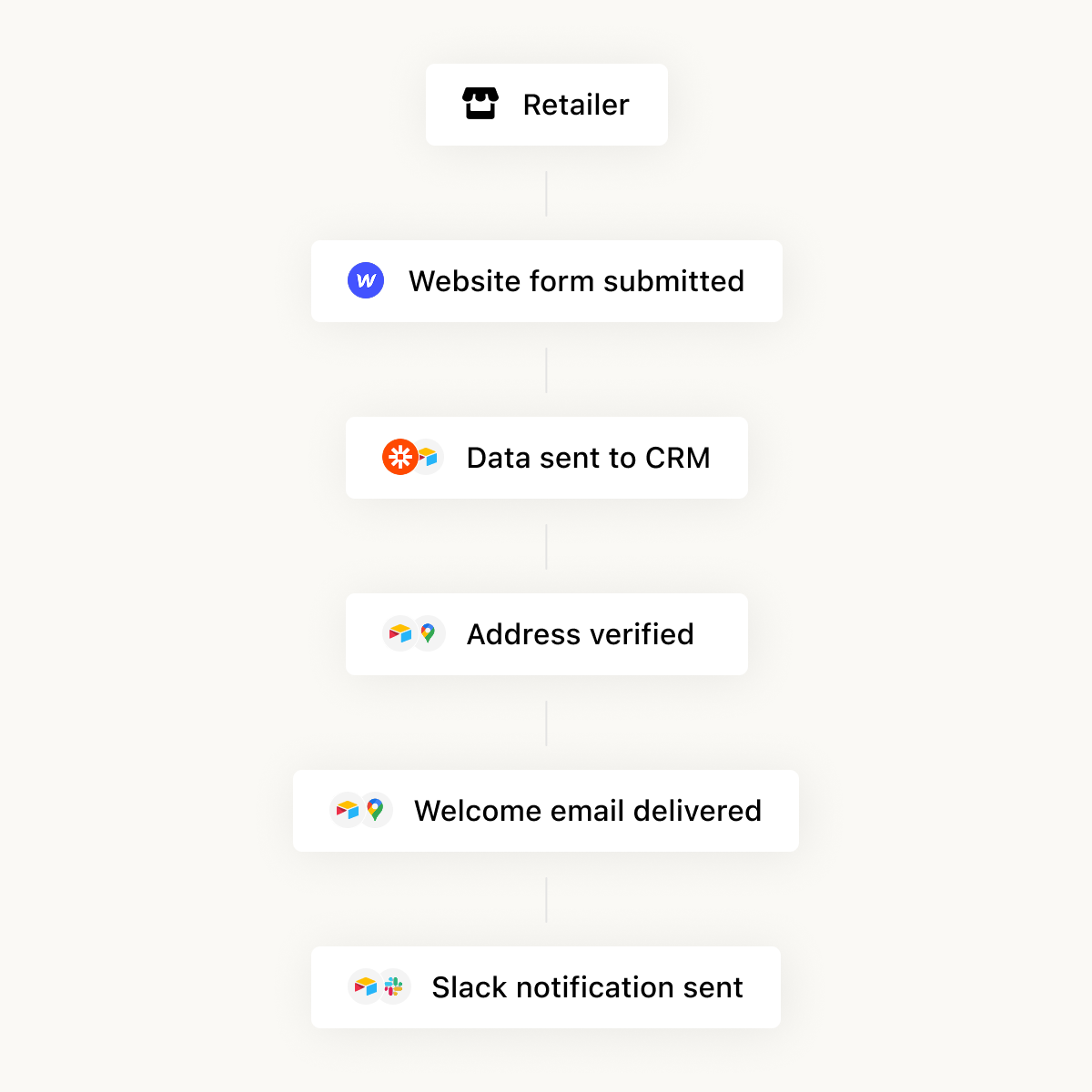
Data from prospective customers that submit the "Retailer" pathway of the website form is piped into this lead staging environment. If the lead is qualified, additional information is inputted to round out the customer profile. Finally, this is synced with a prospective customer drip campaign.
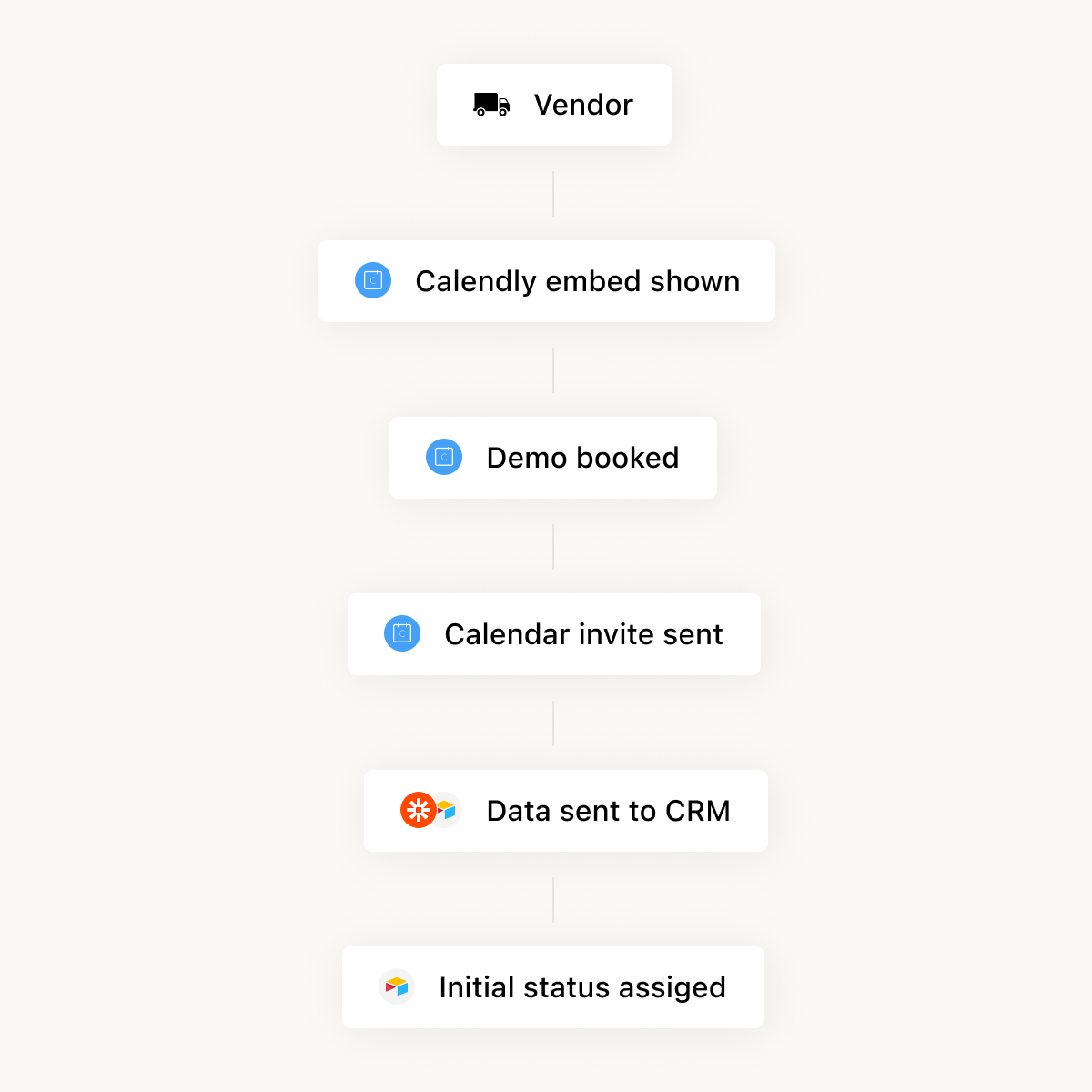
A new Vendor lead is automatically piped into this view after a demo appointment is booked using the website Calendly embed. Their status is then manually updated until they are onboarded; after which the record status is synced with data warehouse changes.
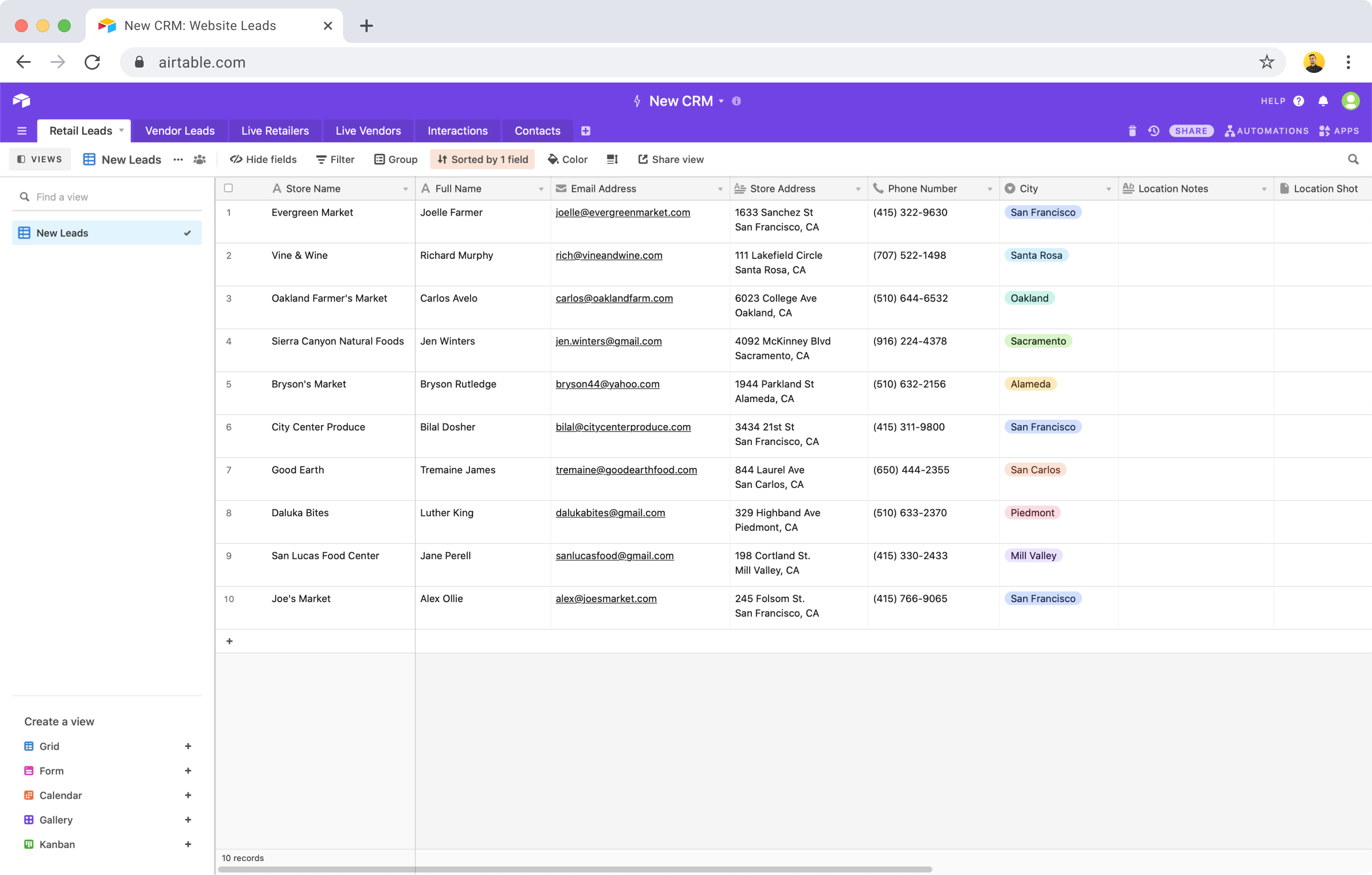
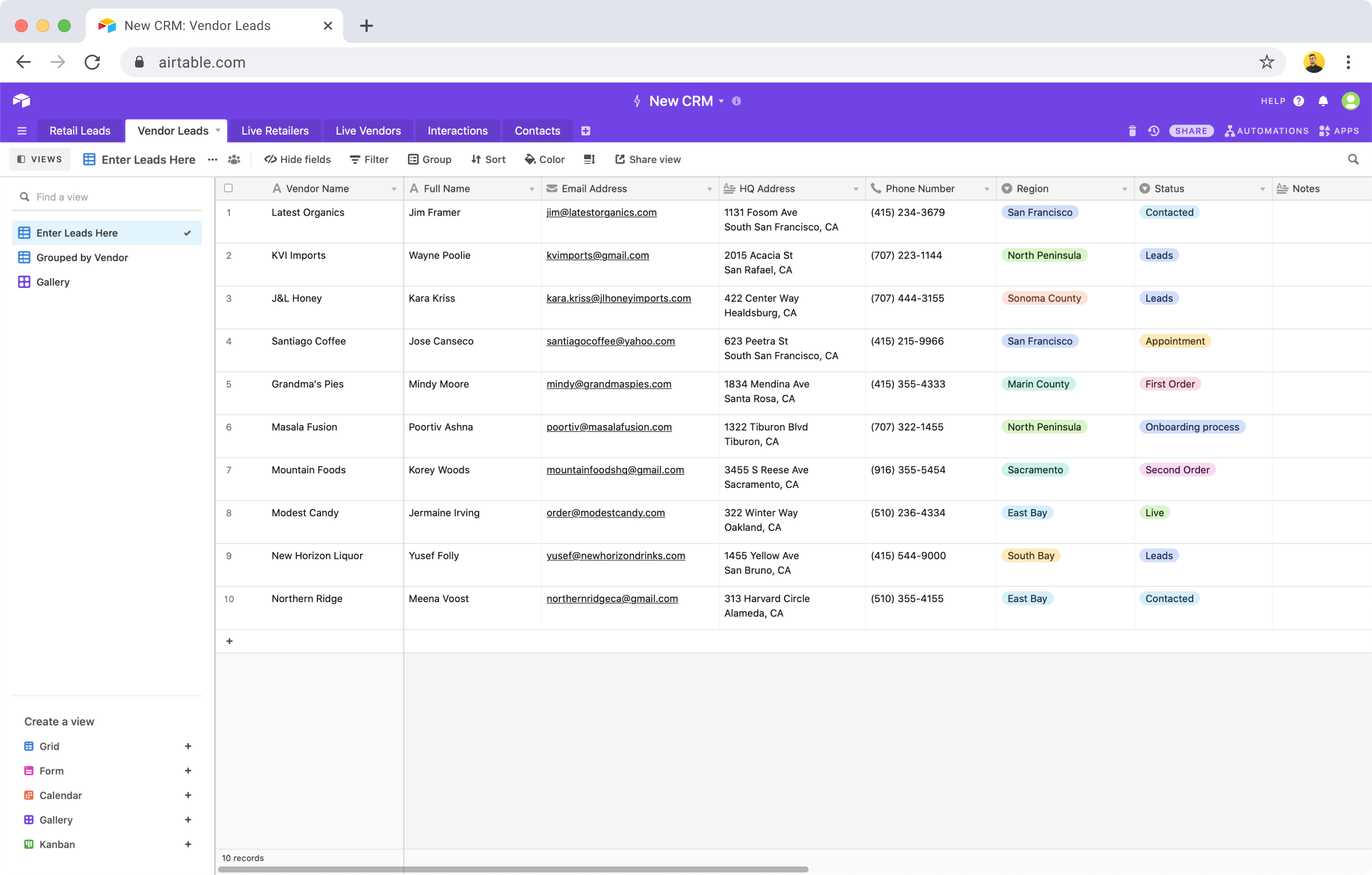
Once customer status (synced with the data warehouse) reaches the qualification threshold, record data is copied into the respective table of the customer segment and deleted from leads. A more robust profile can then be built including multiple contacts and an interactions timeline.
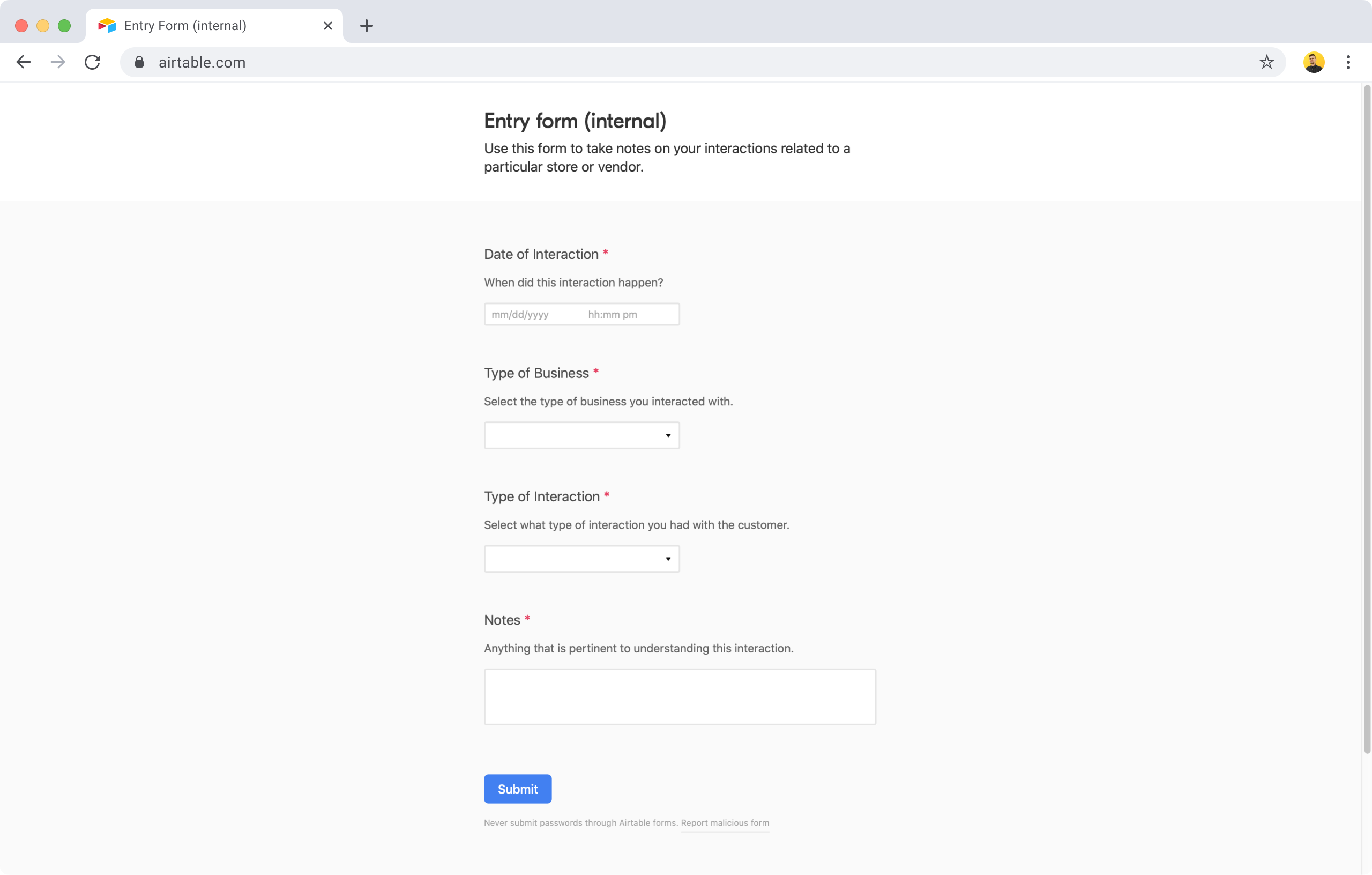
Information is power and relationships require nurturing. Therefore, meticulous tracking of important interactions allow for the development of robust customer profiles that are ripe for actionable insights. At every turn, Vori is prepared to support and empower its growing user base.
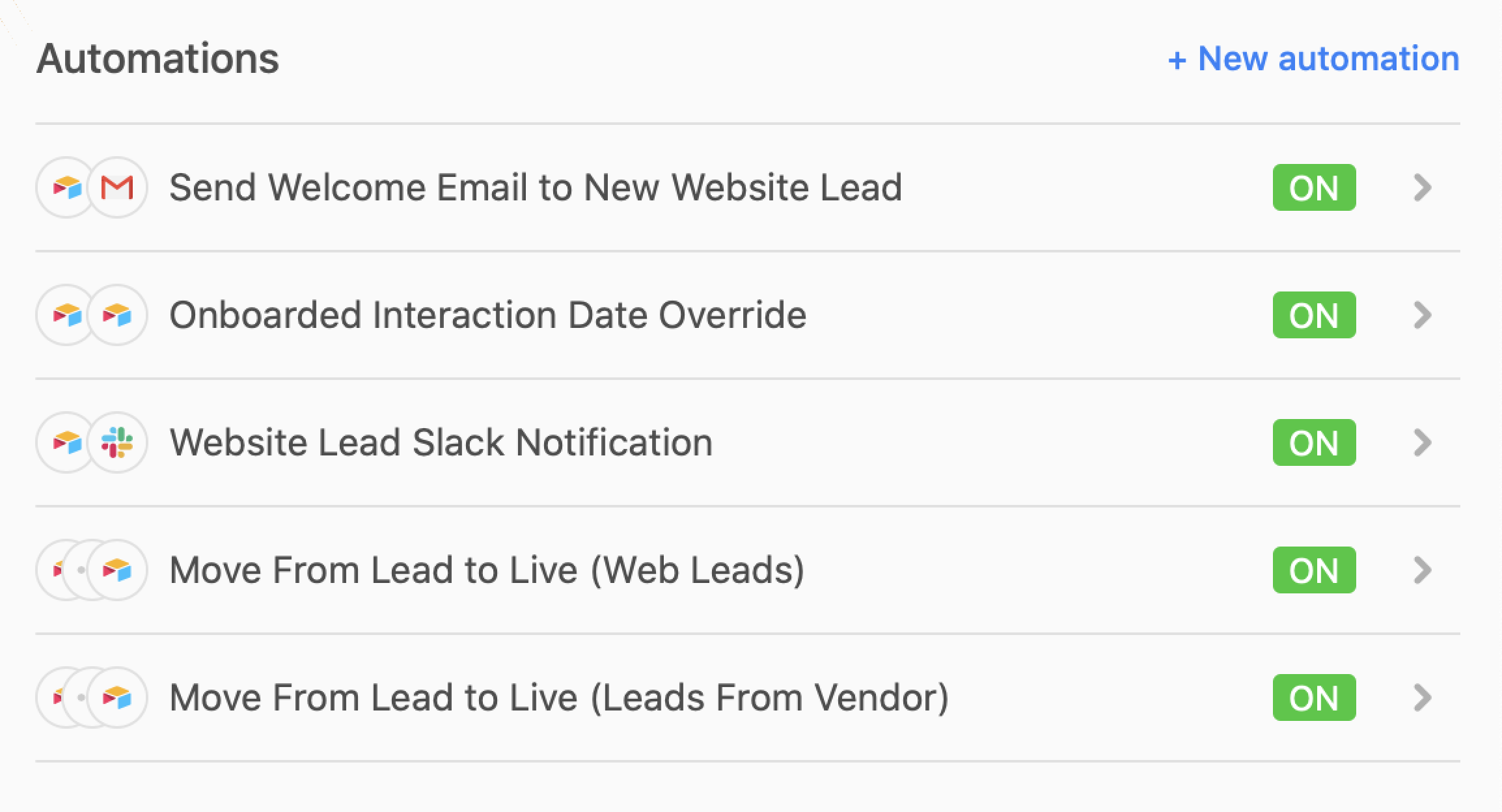
I designed a series of Airtable automations to streamline the management of leads and conversions. This involves flagging the operations team at the start and transferring customer data to different tables after successful onboarding.