
Square
Helping small business thrive
Product concepts based on research with a diverse pool of current Square users.
Product concepts based on research with a diverse pool of current Square users.
February 2026
Research Project
Square's new product direction involves AI-driven strategy and initiatives that benefit a diverse, global network of sellers. In order to better showcase my capabilities across user research, design and product long with a deep commitment to users, I conducted a research project with current Square business owners. This involved deep surveying within a Facebook group, leveraging AI to analyze data and translating needs into several design concepts. I'm excited to share my process, insights and ideas that are applicable to many future roles.

1 — Source feedback from Square users to identify high potential areas for current or future improvement.
2 — Translate those insights into core and AI-focused product concepts that enhance the overall Seller experience.
I wanted to move fast to uncover valuable insights on the Seller experience. I was immediately on the hunt for active communities of participatory Square users. I jumped between several online forums and multiple Subreddits, but none had minimal friction to engaging individuals. Soon after, I discovered the private Facebook group Square Users Group described as a "group of, by, and for users of the Square suite of business products." With nearly 20k global members and 10+ active posts the day of viewing, I decided it had great potential to meet Sellers where they are. After agreeing to some basic ground rules, I was in.
I was quickly greeted with a vibrant community of Square loyalists (and occasional defector) sharing knowledge, asking questions and making requests. Truly a treasure trove of information. This was the place to reach them. Instead of a rigorously structured and scalable research survey, I decided a short post with some context and two questions would result in maximum engagement. Taking into account the end of the work week, I fired off a post at Friday 5PM PST. Let the algorithm hum.

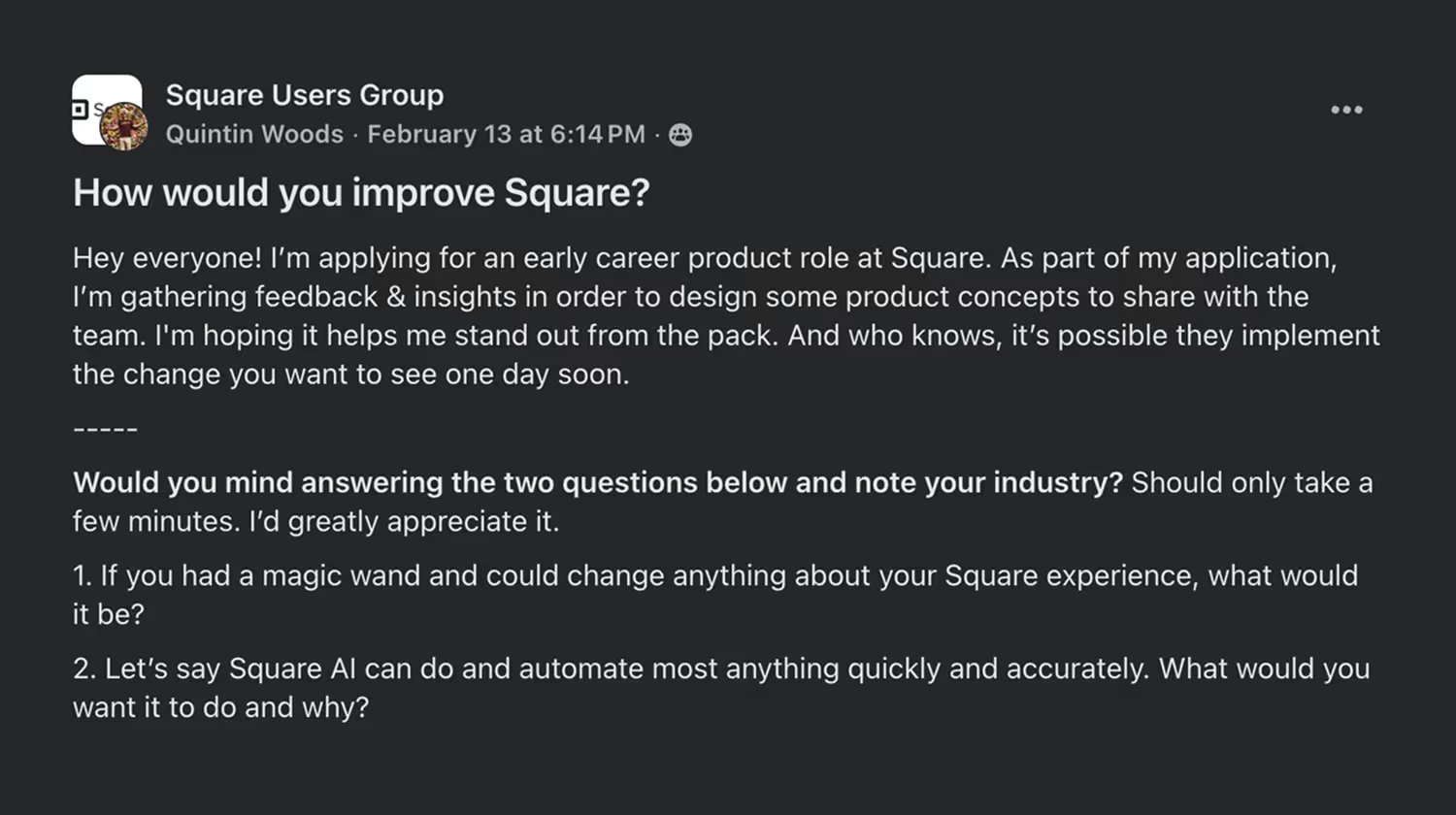

Sure enough, the response was nearly immediate. I had opened the flood gates. Detailed messages with issues, ideas, pictures and videos started pouring in from business owners across a variety of industries. All said and done, 59 current Square users shared their input in a thread that tallied more than 200 different comments. Amber runs a restaurant in Illinois, Melody is a stylist in Memphis and Nathon runs a glass repair business in Iowa. These small business owners are craving a better Square experience. Here's what they had to say:
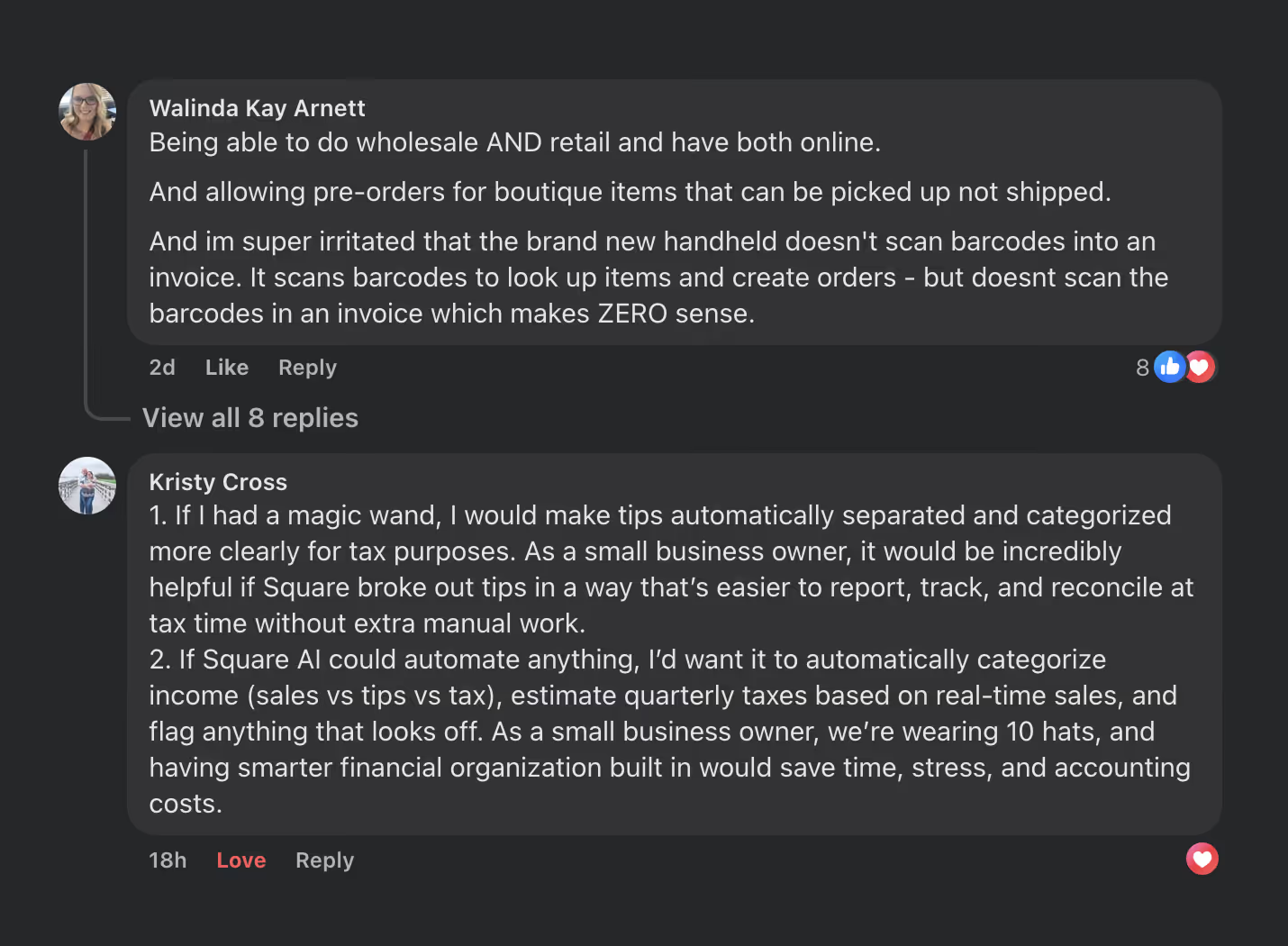
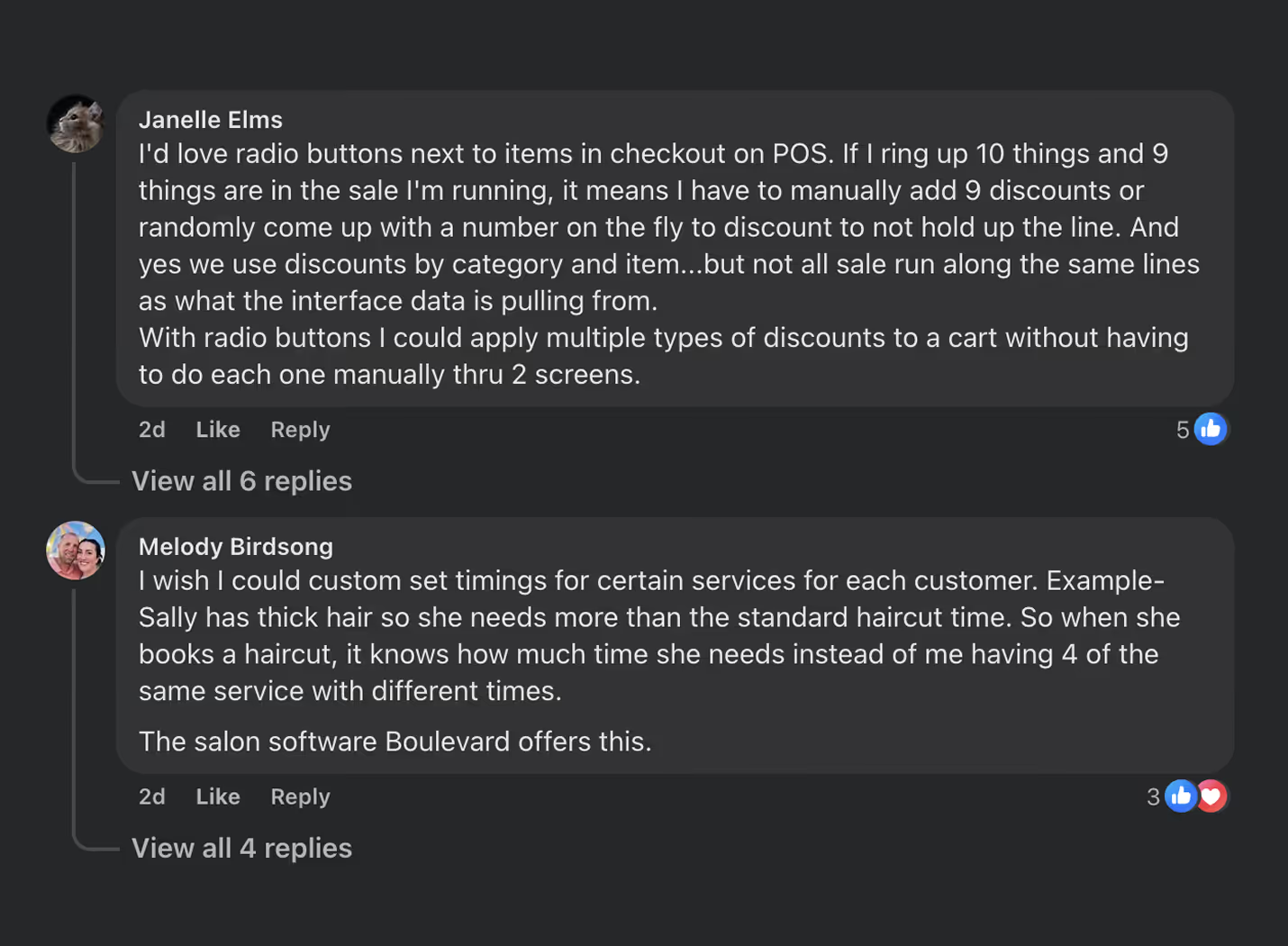
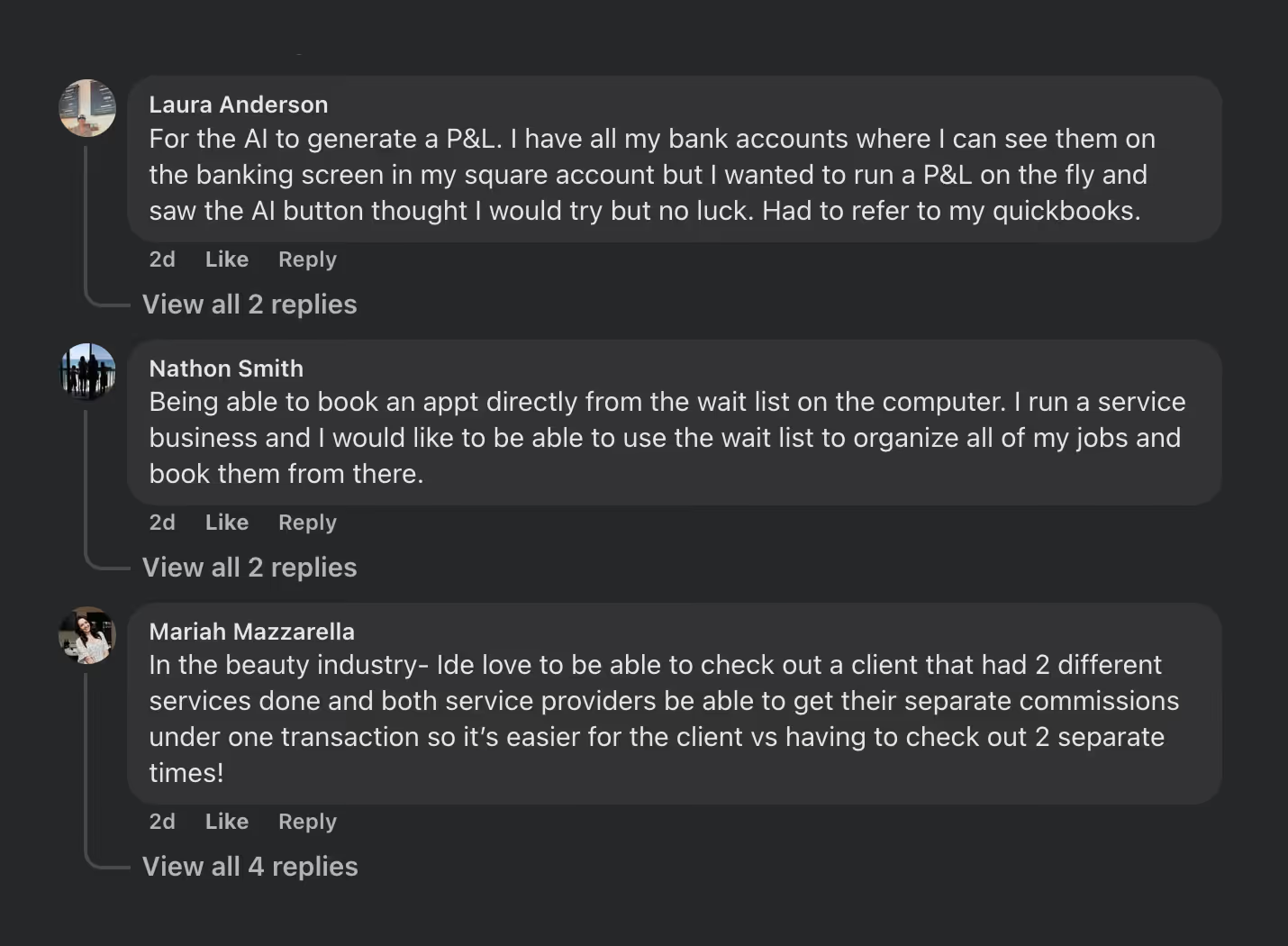
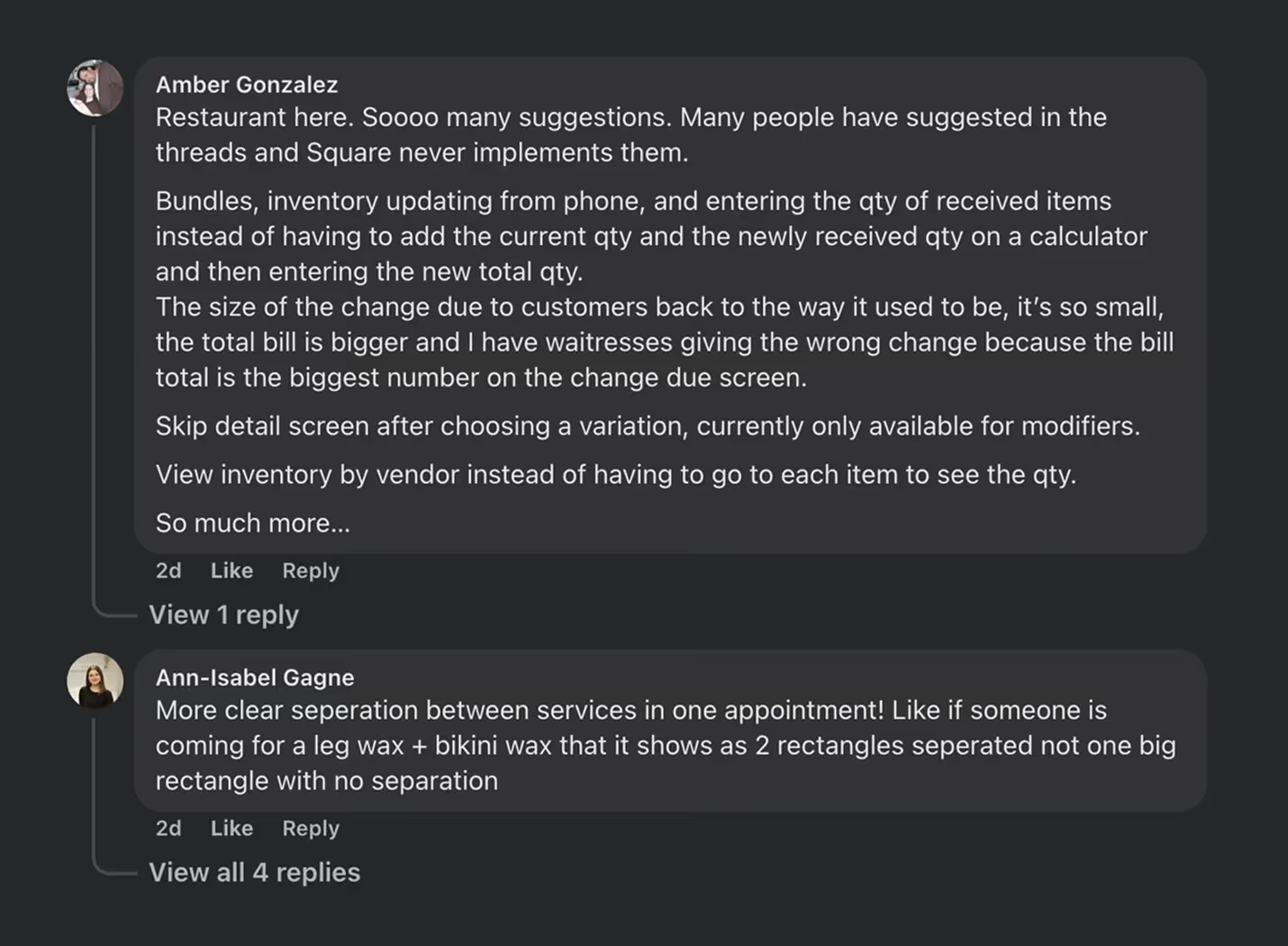
Although the Facebook post was effective to elicit feedback due to minimal friction, there was substantial unstructured quantitative data that I needed to parse for concrete insights. Instead of tedious manual work, I decided to leverage Claude to put the pieces together. To start, I provided relevant context about the post I made to properly frame the activity at hand. Next, I uploaded a .txt file of the entire Facebook thread after transposing it into a Google Doc. I then generated prompts to define the surveyed audience and better visualize their user input.
Prompt: To start, how many unique names are in this document? You can see they on their own line with a hard return after. Don't count duplicates or my name (Quintin Woods). Names with the word "anonymous" in them count too. Please provide a final list at the end.

.avif)
Prompt: Great, thank you! Next, I'd like to determine their associated industries. Nearly every comment thread has a clear reference, but you may need to do some inference as well. I can help manually sort any that may end up under "Other." When done, generate a labeled pie chart with associated percentages, an overlaid key and no title.
Industries: Food & Beverage, Retail & E-commerce, Health & Beauty, Home Services, Leisure & Entertainment, Other
Prompt: Finally, create a horizontal bar chart that represents the frequency of pain point by category. Make sure to remove any duplicate mentions in the same parent comment thread. Remember, they're separated by names that are on their own line. Lastly, label the y-axis "Pain Points" and x-axis "Number of Users." Make sure there's enough white space between each title and the corresponding axis.
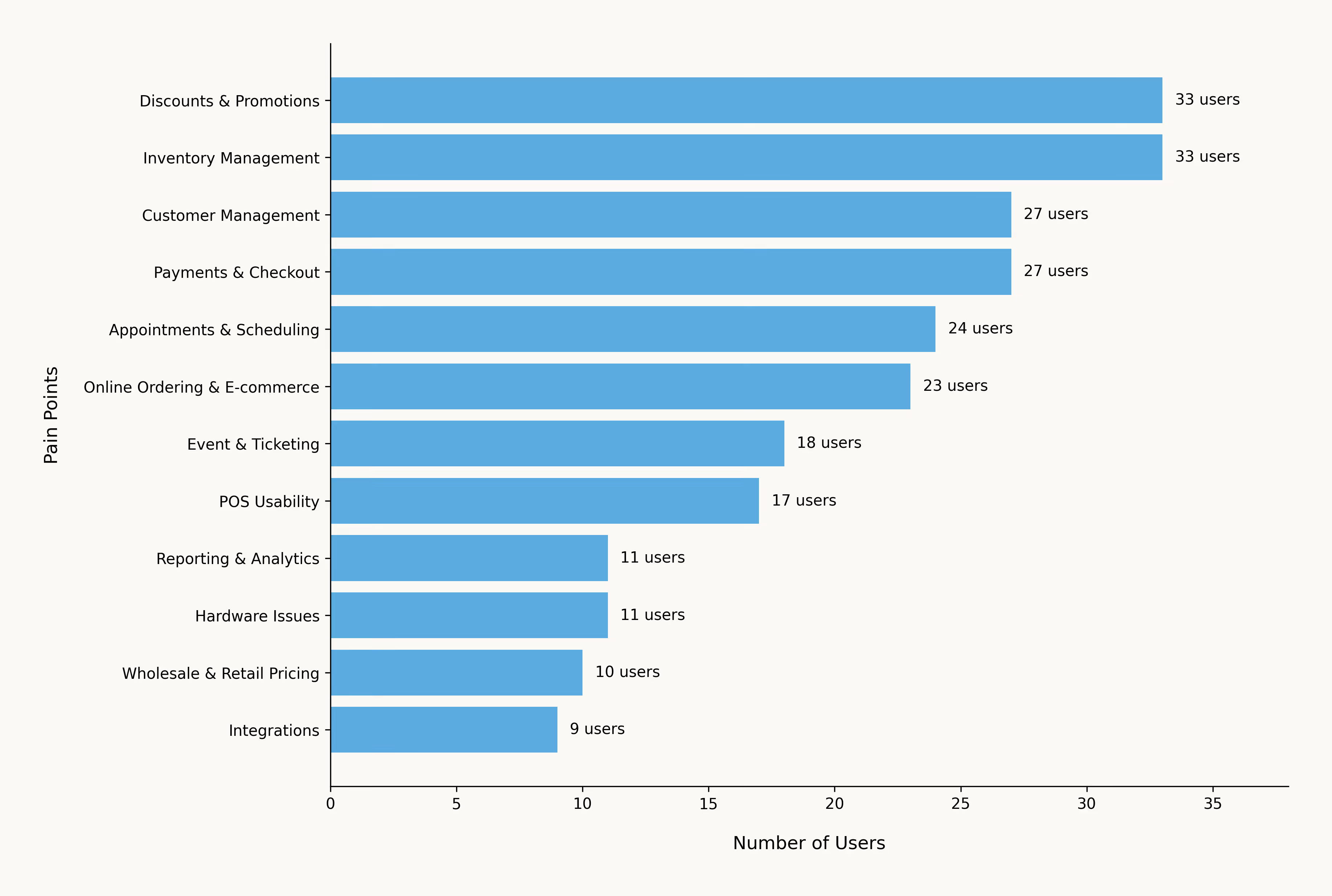
In under 48 hours, I was able to source and analyze feedback from a whopping 59 (!) Square users to determine what parts of the Seller experience needs to be improved and/or reinvented. Their adamant participation was partially fueled by a lack of change in product over time and/or limited response from Square teams across multiple channels. I'm concerned this is a larger trend and should not be ignored due to the small data set.
Business owners in retail and e-commerce spaces comprised roughly half of respondents. This isn't surprising considering the bulk of the Square customer base is in the retail category. Interestingly, users from the beauty sector were the most passionate and engaging. They shared substantial details in their original comment and maintained dialogue in subsequent replies. Diving deeper with the help of Claude, pain points were concentrated the most in five specific areas: Discounts & Promotions, Inventory Management, Customer Management, Payments & Checkout and Appointments & Scheduling. Roughly 56% of respondents shared multiple pain points.
In order to focus this project, I wanted to select a surface area that is 1) a key growth area of Square and 2) represented a worthwhile portion of respondent pain points (41%) who were very detailed in responses. I decided to focus on re-imagining the scheduling experience for the beauty industry.
Health and beauty professionals typically have fluid schedules and serve a diverse customer base (ie. thick vs thin hair). The responsibility and effort required to navigate appointment booking and customer profiles is substantial. It's an interconnected web that's more complex than it may seem at the surface. Scheduling must be very efficient in order to promote predictability, maximize revenue and minimize logistics headaches. It's the difference between thriving and merely surviving.
Square's appointment scheduling system is overly rigid and allows minimal customizability. All customers are served the same booking process regardless of attributes that may influence complexity or revenue like appointment length, materials, etc. Additionally, the ability to create and mold unique customer profiles does not exist. The one-size-fits-all approach is hindering success.
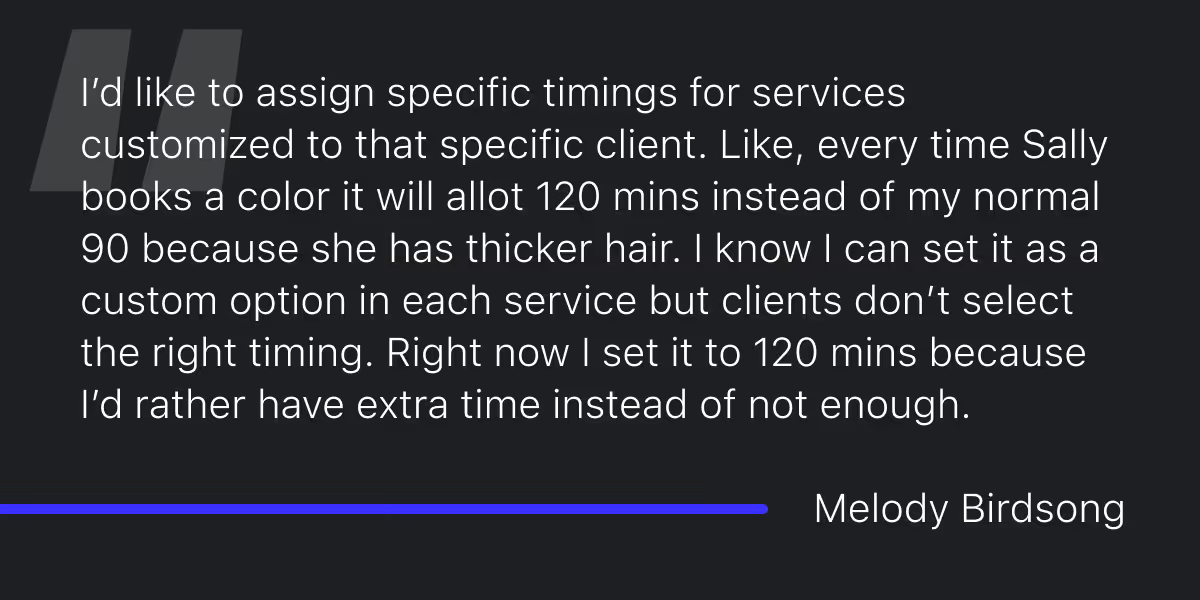
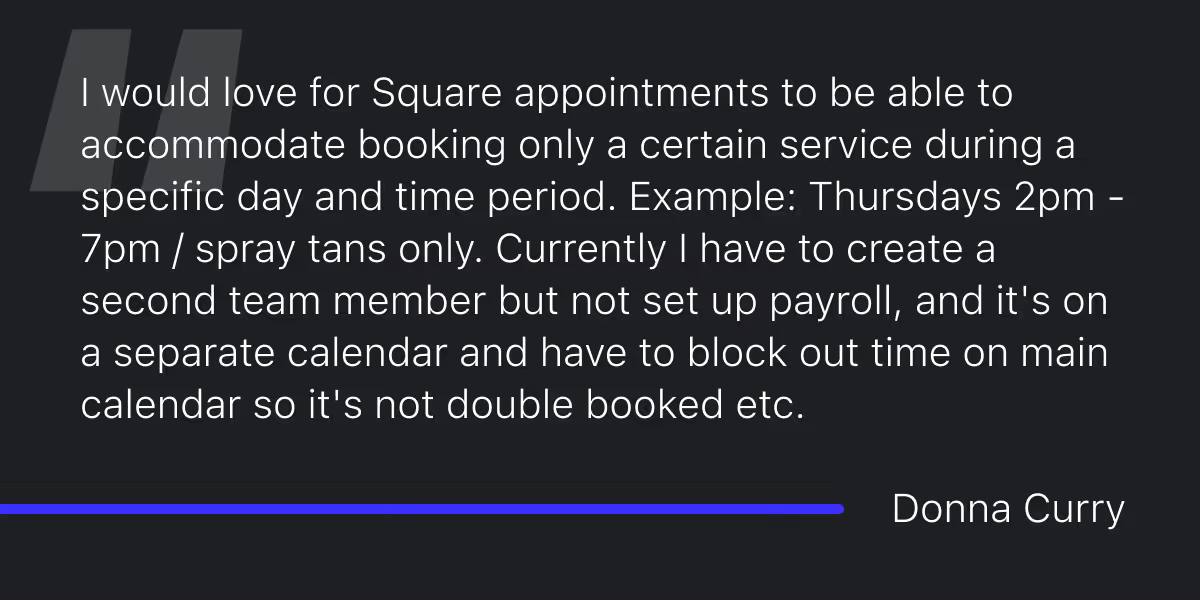
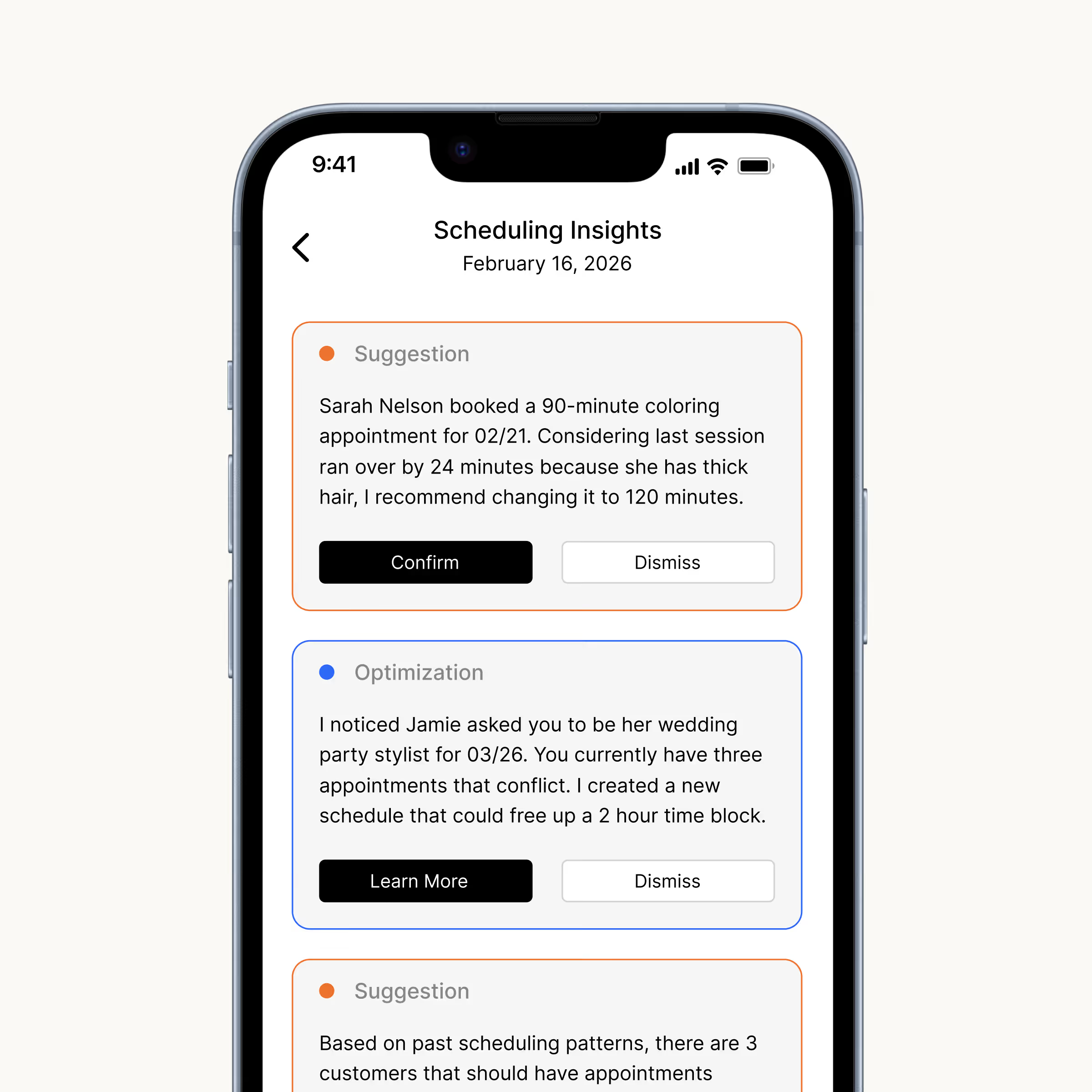
Based on my brief research, two mobile product concepts emerged as high-impact opportunities to address scheduling inefficiencies in the health and beauty industry. The first leverages artificial intelligence to automatically optimize calendar organization based on historical appointment data, reducing the manual workload that currently costs owners time and money. The second focuses on giving owners granular control over when and how services can be booked, eliminating the clunky workarounds they currently employ to manage time-restricted offerings. Together, these concepts address a severe lack of customizability and automation by empowering users with flexible tools that adapt to unique business models. The cumulative result is improved calendar utilization, maximized revenue and a higher quality customer experience.
This intelligent assistant is a self-improving agent, built on a predictive model, that gets smarter with every appointment. It learns from customer appointment history and proactively suggests schedule changes based on aesthetic qualities, past service times and satisfaction. Additionally, it automatically builds and refines customer profiles to automate recurring customer time allocation. As a result, business owners are freed from tedious manual work that consumes valuable time and inefficient calendar organization that results in lost revenue.
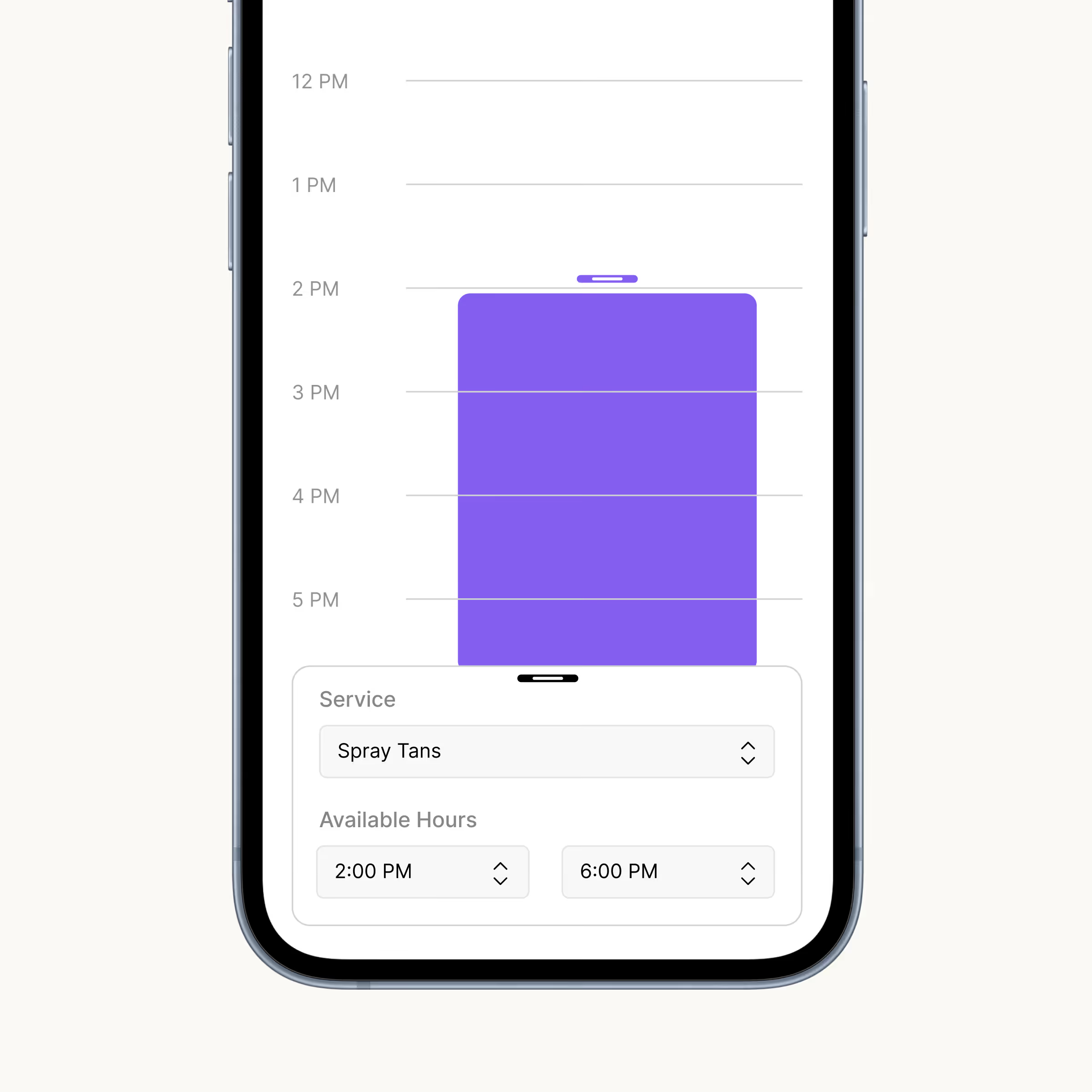
This visual management system allows owners to define clear boundaries for when certain beauty services can be booked. For example, a spa owner can designate 2-6PM on Fridays as an exclusive block only for spray tans. Related customers will only be able to select from this window when scheduling an appointment. Stronger control over calendar organization and equipment availability prevents costly scheduling errors and reduces the need for manual workarounds. Say goodbye to maintaining separate calendars!
This project is a great example of how powerful and ubiquitous user feedback is. It's how all product development cycles should be driven and it's waiting to be tapped like a lithium deposit. It's not rocket science either. I was able to source an impressive mix of suggestions with a limited time frame, an unstructured set of questions and non-existent employee reputation (subject to change). All it took was an even mix of grit, ingenuity and help from a good friend Claude. There's no excuse!
Moving forward, I'd like to gather further insights by spending time in the field with health and beauty business owners. This would involve deeper observation and testing with design prototypes of the concepts created to further validate their accuracy and value. Additionally, user feedback contained a recurring theme that I found quite concerning. Many shared it was a challenge to communicate any feedback effectively and, if received, a response by way of product changes almost never occurred. I understand this is a monumental challenge with Squares global, scaled platform. There is a cacophony of voices coming in from every direction. Regardless, the future success of Square and and the product organization will continue to depend on how close the company can be to its users.